Articles

Junior game designers create a reaction at PAX Gaming industry experts have commended winners of the 2017 Australian STEM Video Game Challenge for their remarkable levels of creativity and technical skill. This year's competition required students as young as 10 to design and build a video game addressing the theme 'reaction'.
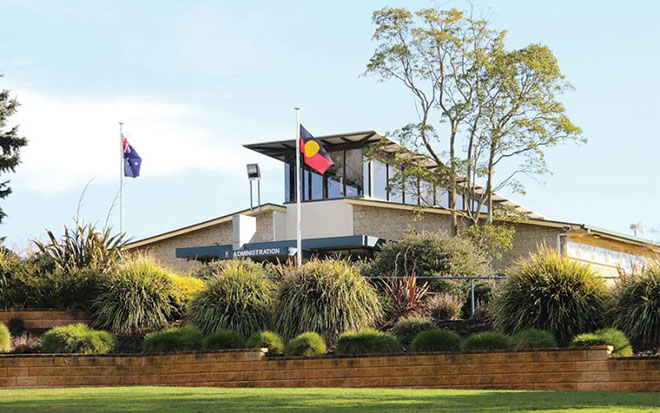
Principals lose hiring freedom in WA Independent Public Schools Since 2010, IPS principals have had complete autonomy over staff selection, but under a change of direction ordered by Education Minister Sue Ellery, they will have to consider education department "redeployees" before hiring  teachers, support and admin staff.
Indigenous students failing to make the maths grade Indigenous students are eight times more likely to fall behind in maths by Year 9 than non-indigenous students, dampening regional innovation according to AMSI's 2017 Discipline Profile of the Mathematical Sciences.
Early childhood investment wasted without quality educators A new paper by Mitchell Institute at Victoria University finds that quality is lagging in key early childhood education and care areas and improving teaching should be a top priority. Highly skilled educators are the most important ingredient but many early childhood educators don’t receive sufficient training or support.
New suite of STEM experiences at Vic Scienceworks Museums Victoria has announced two new permanent exhibitions and a suite of parallel programs at Scienceworks to prepare the next generation for a world of science, technology, engineering and maths. Beyond Perception: Seeing the Unseen will open in April 2018.
‘Equality’ trends in school yard conversation Oxford University Press has announced the 2017 Australian Children’s Word of the Year and it's... equality. Primary school children were invited to take part in the inaugural competition. Participants nominated their ‘Word’ through a piece of free writing up to 500 words based on their chosen word.
Study investigates age when children start to regulate their learning A Uni QLD study led by Phd Student Melissa Brinums is helping parents and teachers understand the capacity of young children to learn independently, by providing insight into children’s understanding of practice. The study investigated the age at which children start to regulate their own learning to achieve their long-term goals.
Noel Pearson's literacy program funding extended Noel Pearson's Good to Great schools program, designed to boost remote students’ literacy and numeracy has been backed with a further $4.1 million from the Turnbull Government, following the release of an independent report highlighting its positive impacts.
Virtual puzzles can teach kids to solve real-world problems Swinburne researchers have shown that children can apply the skills they learn on a tablet to the real world. The research shows that when four to six-year-olds learn how to solve a puzzle using a tablet, they then apply this learning to the same puzzle in the physical world.
Neil Bramsen and Brett Mckay receive Prime Minister's Prize for Excellence in Science Teaching The Prime Minister’s Prizes for Excellence in Science Teaching in Primary and Secondary Schools are awarded for excellence in teaching in any area of science that is part of the teacher’s state or territory science syllabus. The prize is awarded to teachers who have made an outstanding contribution to science education.
2018 Australian Ballet education program wins Aqualand support Property development and investment company Aqualand will become a lead partner of The Australian Ballet 2018 education program. The company will support the Ballet's workshops for primary and secondary students in maginalised schools.
Digital devices add to exam time stress: Family Zone survey A survey of 1000 teenagers and their parents shows that electronic devices are causing sleep and study problems for teenagers as they come up to end of year exams. The survey, commissioned by cyber safety platform, Family Zone, found teenagers are being robbed of sleep in the lead-up to exams