Racism reason for indigenous underachievement?
Pervasive, strong opinions about indigenous students and their inability to engage and learn effect their performance at all levels of education and in later life, still, a report to be presented to government says.
Specificity for better results
High school students taught by a succession of teachers who specialised in teaching a subject instead of holding a general teaching degree consistently did better.
SA’s first driverless shuttle for public roads
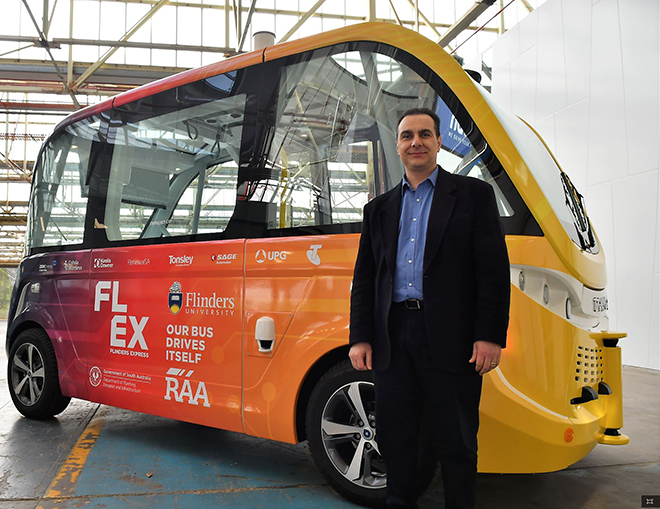
Flinders University in SA is giving us a taste of what is to come with the launch of the driverless electric shuttle which will start transporting members of the public around the Tonsley Innovation District.
Flipgrid’s social learning catches Microsoft’s eye
Flipgrid is a video based social platform aimed at school communities, think a snapchat/ whatsapp/ facebook mashup centred on classrooms. Microsoft has aquired the company and will provide it free to schools.
Using social media for Assessment
I sat in a taxi in Sydney last year, on my way to indulge in another large helping of steamed dumplings in my quest to try all of the top 8 dumpling restaurants Sydney has to offer (as voted by website Concrete Playground).
Scholarships proposed to encourage men into teaching
Look around the teaching staff of any school and one thing becomes apparent: a distinct lack of men. It’s nothing to be joked about, diversity in teaching staff has been identified as a way of diminishing gender roles.
Children's reading and writing skills gone to the dogs
Developing children’s reading ability is about confidence as much as smarts and having a gentle, non-judgmental audience to read to helps with building that confidence. Dogs do that very well.
Call for truce in reading wars
It is odd to think of teaching children to read in terms of war but with the conflict between phonics and whole language approaches a war it has been, and a long one at that.
Making young entrepreneurs
With its research driven programs startup.business is doing its best to give a generation of young entrepreneurs the skills and attitudes needed to thrive as the world of work evolves.
Talking about cancer in the classroom
Chances are that cancer in one form or another will touch most people’s lives and a new resource from the Cancer Council will help schools to support families, kids and staff when it strikes.
Education no guarantee of success
Again, it looks like there is a disconnect between what is being taught and the skills needed to find employment and thrive after education ends; a more careers focussed approach to education is in order.
Year 7 bully to high school victim
What goes around comes around, for some that is. If you bully, you’re more likely to continue to bully or receive a comeuppance, however the best strategy seems to be to stay clear of the entire thing.