


When Neurodiversity Works in Schools: Designing Classrooms Where Different Brains Can Thrive
In many classrooms, there is a familiar moment.
A student shifts constantly in their chair, unable to stay still. Another struggles to begin a writing task despite clearly understanding the topic. A third appears withdrawn, overwhelmed by the room’s noise and pace.
Too often, these students are described in deficit terms: distracted, disengaged, difficult.
But what if the problem isn’t the student?
What if the classroom wasn’t designed with their brain in mind?
This question sits at the heart of the growing conversation around neurodiversity, the recognition that neurological differences such as ADHD, autism, dyslexia and dyspraxia are natural variations in how human brains work (Singer, 1999). Rather than viewing these differences as problems to be corrected, neurodiversity asks schools to reconsider how learning environments are designed.
When schools get this right, something remarkable happens: students who once struggled to fit within rigid systems begin to flourish.
For decades, education systems approached learning differences through a deficit model. Students who struggled to focus, read fluently or follow conventional classroom routines were often viewed as falling short of the “standard learner.”
Yet research increasingly shows that neurodivergent individuals often bring valuable cognitive strengths. Many demonstrate exceptional creativity, pattern recognition, spatial reasoning and innovative problem-solving (Baron-Cohen, 2020; Armstrong, 2010).
Dyslexic thinkers, for example, are significantly overrepresented among entrepreneurs due to their strengths in big-picture thinking and visual reasoning (Logan, 2009). Individuals with ADHD frequently display high levels of creativity and risk tolerance, traits strongly linked with innovation (White & Shah, 2006).
The challenge for schools is not eliminating these differences, but ensuring that learning environments allow them to become strengths rather than barriers.
One of the most effective approaches to inclusive education is Universal Design for Learning (UDL), a framework that encourages educators to present information in multiple ways, offer different methods of engagement and allow students varied ways to demonstrate their learning (Meyer, Rose & Gordon, 2014).
Instead of a single teaching style or assessment method, classrooms become flexible learning environments. A concept might be explained visually, discussed collaboratively and explored through hands-on activities. Students may demonstrate understanding through presentations, creative projects, multimedia work or traditional written responses.
Research consistently shows that when teaching is designed for diverse learners, engagement increases across the entire classroom, not just for neurodivergent students.
Across Australia, some schools are already embedding approaches that recognise the connection between wellbeing, learning and cognitive diversity.
At Mt St Michael’s College in Ashgrove, Brisbane, inclusion and neurodiversity are not treated as a standalone initiative. Instead, they are embedded within the everyday culture of the school.
The College describes itself as an inclusive school, where diversity is recognised, respected and supported through collaborative relationships between students, teachers, parents and the broader school community.
While the College’s Positive Education Program provides a visible framework for teaching resilience, wellbeing and emotional skills, the commitment to neurodiverse learners extends far beyond a single program. The approach integrates learning support, pastoral care and psychological services to ensure that students are supported academically, socially and emotionally.
What distinguishes this model is the emphasis on whole-school responsibility. Teachers, pastoral leaders and the College psychologists work together to ensure that support strategies are implemented consistently across subjects and year levels. Rather than being isolated within a learning support unit, inclusive practices are embedded in everyday classroom teaching.
For students with learning differences or additional needs, Individual Learning Plans (ILPs) play an important role. Within the College’s inclusive framework, however, these plans are not treated as static documents created for compliance. Instead, they form part of an ongoing conversation between teachers, learning support staff, students and families.
Learning support teams collaborate with classroom teachers and academic coordinators to design curriculum adjustments tailored to individual learning needs. This includes differentiated teaching approaches, assessment adjustments and targeted strategies that allow students to access the curriculum while remaining fully engaged in the broader learning community.
The result is a culture where support for neurodivergent learners is visible across the entire school environment. Teachers are expected to understand and respond to diverse learning needs, pastoral leaders help students develop the emotional and organisational skills required for learning, and psychologists provide professional guidance when additional support is required.
Importantly, this approach recognises that inclusion is relational. When teachers know their students well and collaborate across the school, Individual Learning Plans become living tools rather than administrative requirements.
In this way, the inclusion of neurodiversity at Mt St Michael’s College is not simply about implementing programs, it is about creating a school community where every student is known, supported and able to flourish.
Research supporting positive education suggests that when schools prioritise wellbeing alongside academic achievement, improvements occur in motivation, resilience, creativity and learning outcomes (Seligman et al., 2009; Waters, 2011). Programs like the one at Mt St Michael’s demonstrate how schools can move beyond reactive support models and instead build environments designed for diverse learners.
Perhaps the most important shift in supporting neurodiversity is learning to interpret student behaviour differently. What appears to be laziness, defiance, or disengagement is often the visible sign of invisible cognitive challenges.
A student who does not begin a task may feel overwhelmed by executive functioning demands. A student who interrupts frequently may be struggling with impulse control. A student who withdraws may be experiencing sensory overload in a busy classroom.
When educators understand the neurological drivers behind behaviour, their responses shift from discipline to support. Research consistently shows that positive teacher–student relationships are among the strongest predictors of engagement and learning outcomes (Hattie, 2012).
For neurodiversity to truly work in schools, inclusion must move beyond policy statements or individual accommodations. It requires a broader cultural shift in how education systems understand learning itself.
Different brains do not need to be fixed.
They need classrooms where they can flourish.
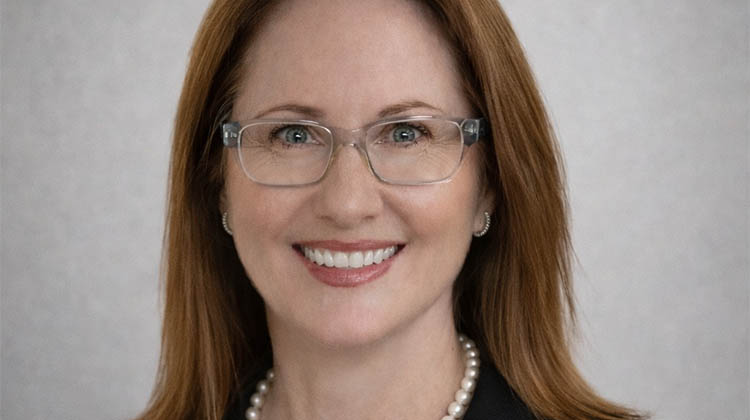
Dr Kate Robinson is the founder of CommuniKate Consulting and Vice Chair of Women Veterans Australia, with a career spanning leadership, advisory, and consulting roles in Australia and the United States. Holding qualifications in business, social research, professional writing, and a PhD, she specialises in ethics, organisational culture, and leadership development. She is the author of Values, Moral Courage and Bureaucracy (Palgrave Macmillan, 2024) and advocates for ethical leadership and culture reform.
References
Armstrong, T. (2010). Neurodiversity: Discovering the extraordinary gifts of autism, ADHD, dyslexia, and other brain differences. Da Capo Press.
Barkley, R. A. (2015). Attention-deficit hyperactivity disorder: A handbook for diagnosis and treatment (4th ed.). Guilford Press. Russell A. Barkley.pdf
Baron-Cohen, S. (2020). The pattern seekers: How autism drives human invention. Allen Lane.
Hattie, J. (2012). Visible learning for teachers: Maximizing impact on learning. Routledge. Microsoft Word - Hattie - Visible Learning for Teachers - FINAL with FORMATTING.doc
Logan, J. (2009). Dyslexic entrepreneurs: The incidence; their coping strategies and their business skills. Dyslexia, 15(4), 328–346. https://doi.org/10.1002/dys.388
Meyer, A., Rose, D. H., & Gordon, D. (2014). Universal design for learning: Theory and practice. CAST Professional Publishing.
Pellicano, E., & den Houting, J. (2022). Annual research review: Shifting from ‘normal science’ to neurodiversity in autism science. Journal of Child Psychology and Psychiatry, 63(4), 381–396. https://doi.org/10.1111/jcpp.13534
Ratey, J. J. (2008). Spark: The revolutionary new science of exercise and the brain. Little, Brown and Company. 28217742-0-Spark-by-John-Ratey-.pdf
Seligman, M. E. P., Ernst, R. M., Gillham, J., Reivich, K., & Linkins, M. (2009). Positive education: Positive psychology and classroom interventions. Oxford Review of Education, 35(3), 293–311. https://doi.org/10.1080/03054980902934563
Singer, J. (1999). ‘Why can’t you be normal for once in your life?’ From a ‘problem with no name’ to the emergence of a new category of difference. In M. Corker & S. French (Eds.), Disability discourse (pp. 59–67). Open University Press. Disability Discourse - Corker, Mairian, French, Sally - Google Books
Waters, L. (2011). A review of school-based positive psychology interventions. The Australian Educational and Developmental Psychologist, 28(2), 75–90. https://doi.org/10.1375/aedp.28.2.75
White, H. A., & Shah, P. (2006). Uninhibited imaginations: Creativity in adults with attention-deficit/hyperactivity disorder. Personality and Individual Differences, 40(6), 1121–1131. https://doi.org/10.1016/j.paid.2005.11.007