


Trauma-informed Education for War-affected and Refugee Students - A Moment on the School Playground
One afternoon, a military truck passed close to the gates of Laroo Boarding School in northern Uganda. Suddenly, as if on cue, children abandoned their game of touch rugby and ran to the fence. Taking aim with imaginary guns, they sprayed the truck with invisible bullets. In that moment, the truck had transformed from an ordinary vehicle into a powerful trauma trigger. Laroo Boarding School, located in Gulu in northern Uganda, came to house hundreds of former child abductees of the rebel Lord’s Resistance Army following the Juba Peace Talks in 2006. Its crest featured a machine gun beneath a large red X, symbolising a gun-free zone. Yet research with war-affected youth demonstrates that psychological battles can continue long after the fighting ends. A study conducted three years after the school opened found that 57% of students surveyed still reported clinically significant symptoms of post-traumatic stress (McMullen et al., 2011).
Although this example comes from northern Uganda nearly two decades ago, the issues it highlights remain deeply relevant today. Ongoing conflicts in regions such as Ukraine, Gaza, Sudan, Myanmar, and the wider Middle East continue to displace millions of families. Many seek safety and stability through education systems in other countries. As a result, teachers across Europe, Australia, and North America are increasingly working with students whose early experiences may include conflict, displacement, uncertainty, and loss. For educators, the challenge is not solely academic. It involves understanding how trauma can shape learning, behaviour, relationships, attention, and emotional regulation within the classroom.
Beyond the direct experiences of displacement and resettlement, global conflict has also become more immediate and visible in the everyday lives of children and educators. Real-time exposure to war through social media, rolling news coverage, and community conversations means that even students geographically distant from conflict zones may experience heightened fear, anticipatory anxiety, and emotional distress. Schools are therefore navigating a new psychological landscape in which trauma-informed awareness is no longer a specialist concern, but a core component of creating inclusive, safe, and supportive learning environments (Cogan et al., 2025). This article explores why understanding the impact of trauma is now essential for educators and outlines practical principles to help schools respond with confidence, compassion, and psychological insight.
War Does Not Stay Where it Begins
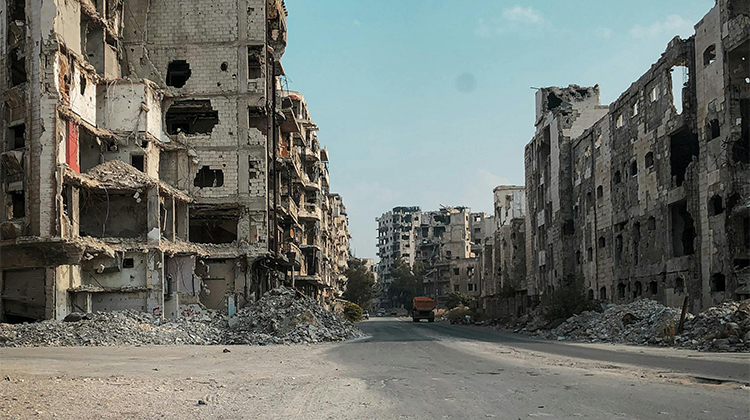
Today educators in countries such as the United Kingdom, Ireland, and Australia no longer need to travel to conflict zones to encounter the effects of war. War does not remain where it begins. Across classrooms in cities such as Bristol, Belfast, and Brisbane teachers are increasingly working with children whose early years were shaped not by phonics or maths lessons but by displacement, uncertainty, and violence.
Globally the scale of the challenge is significant. There are currently more than 14.8 million school aged refugee children worldwide and more than half, over 7 million, are not enrolled in formal education (UNHCR, 2023). Within OECD countries demographic changes are also reshaping classrooms. By 2020 nearly one in five children under the age of 16 in OECD countries were either immigrants themselves or born to immigrant parents (OECD, 2024). As these numbers rise, trauma-informed support is no longer a niche concern. It is becoming an essential part of modern educational practice.
Understanding Trauma in the Classroom
Despite the increasing presence of refugee and asylum seeking students in schools the evidence base on effective educational interventions remains relatively limited. A recent mixed methods systematic review examining interventions for refugee youth in school and tertiary settings found that cognitive behavioural therapy based programmes currently have the strongest evidence base (Noyes et al., 2025). However, the authors also emphasised the importance of trauma-informed systems within schools themselves, recognising the key role that schools play in healing, integration, and long-term life outcomes for young people affected by conflict and displacement. Trauma can arise from war, conflict, violence, forced migration, and discrimination. It may also emerge from systems that prioritise punishment over understanding and recovery. In schools trauma rarely appears as trauma. Instead, it often emerges as behaviour such as withdrawal, aggression, difficulty concentrating, or heightened vigilance. Trauma-informed approaches encourage educators to shift the question from “What is wrong with this student?” to “What might this student have experienced?”
What Trauma-informed Schools Look Like
Research suggests that trauma-informed programmes share several common features. They tend to be strengths based, compassionate, and grounded in an understanding of how trauma affects learning, behaviour, and emotional regulation. Central to this approach is the creation of environments that are safe, predictable, and relational. As argued elsewhere, cultures of care are also cultures of excellence. When learners feel safe physically, psychologically, and relationally they are more likely to engage, participate, and achieve academically (Cogan, 2025).
Challenging behaviour is interpreted through a trauma-informed lens. Educators model calm and respectful interactions and emphasise restorative rather than punitive responses to conflict. Students are given voice and choice where possible and opportunities are intentionally created to develop emotional regulation, mindfulness, and self-awareness. Skill building is particularly important. In trauma-informed schools all adults who interact with students, from teachers and classroom assistants to lunchtime supervisors and school nurses, are supported to recognise signs of distress and respond appropriately. When the entire school community shares this understanding it creates a consistent environment in which students can begin to feel safe again.
The EMBRACE Framework
One widely recognised whole school model is the EMBRACE Framework developed by Dr Catriona O’Toole in Ireland. Grounded in relational and ecological principles the framework places compassion at the centre of trauma-informed practice. Its symbol is a flower, delicate yet resilient. At the core lies compassion enabling staff and students to acknowledge and accept struggles in themselves and others. Compassionate relationships help students feel understood, build trust, and create the conditions necessary for learning and growth (O’Toole and Dobutowitsch, 2022). Each petal represents one of seven key principles of trauma-informed practice identified in the literature as safety, trust, empowerment, collaboration, peer support, student choice, and cultural humility. The framework emphasises that trauma-informed education cannot be confined to individual classrooms. It requires a whole school approach that includes teaching practices, school policies, disciplinary systems, staff training, and partnerships with families and community organisations.
At the same time schools across many countries are navigating increasingly polarised public debates about migration and asylum. These wider societal tensions can sometimes surface within school communities and create additional challenges for educators. Students who have experienced displacement may already feel uncertain about belonging or acceptance in their new environments. Trauma-informed approaches provide a constructive way of responding to these complexities by focusing on safety, compassion, and inclusion for all learners.
Schools as Spaces of Healing
Despite the trauma triggers they faced, the children at Laroo Boarding School did not see themselves simply as victims. Instead, they sought to make sense of their experiences by reflecting on the contrast between their past and present lives and integrating these experiences into their developing identities (O’Callaghan et al., 2012). Although the school itself no longer exists and the children are now adults the lessons remain relevant. Opportunities to process trauma, rebuild trust, and regain a sense of safety were essential to their long-term recovery.
Schools today have a similar opportunity and responsibility. For educators this means recognising that learning does not occur in isolation from emotional experience. Students who have experienced trauma may need additional predictability, relational support, and opportunities to develop self-regulation skills before academic learning can fully take place. In practical terms trauma-informed education may involve small but meaningful changes to everyday practice. These can include establishing consistent classroom routines, providing calm spaces where students can regulate their emotions, responding to challenging behaviour with curiosity rather than punishment, and strengthening partnerships with families and community support services.
Professional development for teachers is also essential. Many educators report feeling under-prepared to respond to trauma related behaviour in the classroom. Providing staff with training and support can help schools respond more confidently and compassionately to students who have experienced adversity. When trauma-informed approaches are embedded across school communities, classrooms can become places not only of learning but also of healing, stability, and belonging. Ensuring that schools are supported to adopt these approaches is therefore not simply desirable. In an increasingly interconnected and displaced world it is becoming an urgent educational priority.
References
Cogan, N., Cousquer, G. O., McCann, S., & Feeny, A. (2025, Nov 14). Student Mental Health: Building Cultures of Wellbeing in Schools and Universities. Education Today. https://www.educationtoday.com.au/news-detail/Student-Mental-Healt-6643 2.
Cogan, N. (2025). Creating Safe and Trauma-Informed Learning Environments: A Culture of Excellence in Schools and Universities. Minnis Journals. https://www.minnisjournals.com.au/newsletter/preview.php?newsletter_id=700
McMullen, J., O'Callaghan, P., Shannon, C., Black, A., & Eakin, J. (2013). Group trauma-focused cognitive-behavioural therapy with former child soldiers and other war-affected boys in the DR Congo: a randomised controlled trial. Journal of child psychology and psychiatry, and allied disciplines, 54(11), 1231–1241. https://doi.org/10.1111/jcpp.12094
Noyes, A., Kubishyn, N., & Brown, J. (2025). A mixed systematic review of interventions to support the well-being of refugee youth in school and community settings. Children and Youth Services Review, 176, 108371. https://doi.org/10.1016/j.childyouth.2025.108371
O’Callaghan, P., McMullen, J., Shannon, C., Rafferty, H., & Black, A. (2013). A randomized controlled trial of trauma-focused cognitive behavioral therapy for sexually exploited, war-affected Congolese girls. Journal of the American Academy of Child & Adolescent Psychiatry, 52(4), 359-369.
O’Toole, C., & Dobutowitsch, M. (2023). The courage to care: Teacher compassion predicts more positive attitudes toward trauma-informed practice. Journal of Child & Adolescent Trauma, 16(1), 123-133.
OECD (2024). The integration of children of immigrants in OECD countries.
UNHCR (2023). Refugee education report: Global trends in refugee education.
Image by Ali Saleh