


This Land: Supporting Teachers, Strengthening Belonging in Australian Classrooms
Across Australia, teachers are working at the front line of profound social, cultural, and educational change. They are asked not only to teach literacy, numeracy, science, and history, but to respond to rising student anxiety, navigate contested social debates, manage increasing behavioural and emotional complexity, and foster cohesion in classrooms that reflect extraordinary diversity of background and experience.
This expanding role is not the result of failure on the part of teachers. On the contrary, it is a testament to their professionalism, care, and resilience that schools continue to function as places of learning and stability in an increasingly unsettled cultural climate. Teachers are carrying an enormous load, often quietly, often without adequate recognition and they deserve both respect and practical support.
Education matters because it shapes how young people understand themselves, one another, and the country they share. That responsibility has never been heavier. It is therefore essential that teachers are supported with resources that are constructive, age-appropriate, and unifying resources that help them do what they do best: teach with confidence, balance, and purpose.
The Expanding Expectations Placed on Schools
Over time, schools have become the default institution for addressing an ever-growing range of social concerns. Issues once primarily dealt with by families, communities, or civic institutions now land in classrooms. Teachers are expected to help students process complex questions about identity, history, environment, wellbeing, and global events, often at very young ages.
These expectations are not unreasonable in intent. They reflect a genuine desire to prepare young people for participation in a complex world. But they can become overwhelming when layered onto already crowded curricula and when they are introduced without sufficient regard for developmental readiness.
Many teachers report that classrooms have become emotionally heavier spaces. Students arrive carrying anxiety about the future, confusion about their place in society, and uncertainty about what it means to belong. Teachers, in turn, are left managing not only learning outcomes but emotional responses often without the time, training, or resources to do so effectively.
Importantly, these pressures are not created by teachers. Curriculum frameworks and policy settings are developed far from classrooms, yet teachers live with their consequences every day. Recognising this distinction is crucial if we are to have a constructive conversation about education.
Curriculum, Balance, and the Classroom Reality
Education has never been neutral, nor should it pretend to be. Decisions about what is taught always reflect judgments about what matters. Historically, however, those judgments were anchored by a strong emphasis on knowledge: reading, writing, mathematics, science, history, and civics taught through evidence, context, and debate.
In recent years, teachers have observed a shift toward curricula that ask schools to address increasingly complex social and political issues. Topics such as sustainability, identity, global citizenship, and social justice now appear across all subject areas and year levels.
The challenge for teachers is not the presence of these topics themselves, but the way they are sometimes framed. When complex policy questions are presented as settled moral truths, or when students are encouraged to adopt particular emotional or political responses rather than explore evidence and perspectives, teachers are placed in a difficult position.
They must balance curriculum requirements with their professional judgment about what is appropriate, fair, and manageable for their students. They must maintain classroom cohesion while navigating content that can polarise or distress. And they must do so while remaining faithful to their role as educators, not activists.
This is an extraordinarily difficult task and one that requires thoughtful, supportive resources rather than additional pressure.
Student Wellbeing and the Weight of the World
Alongside curriculum changes, teachers are witnessing a troubling rise in student anxiety and disengagement. Increasing numbers of young people report feeling overwhelmed, pessimistic, or powerless about the future. Anxiety and depression are now among the most common mental health challenges faced by children and adolescents.
These trends have multiple causes and cannot be laid at the feet of schools alone. However, teachers are often the ones responding to their effects. When students are repeatedly exposed to narratives that emphasise crisis, failure, or inherited guilt, it is unsurprising that some feel distressed or disempowered.
Teachers frequently express concern that students are being asked to grapple with problems that feel far beyond their capacity to influence. Rather than developing confidence and agency, some young people internalise a sense that the world is broken and that they are somehow responsible for fixing it.
Education should lift students up, not weigh them down. It should equip them with knowledge, perspective, and the intellectual tools to engage with complexity over time. That requires balance, context, and hope - qualities that teachers strive to cultivate, even under increasingly difficult circumstances.
Why Belonging Matters in Education
One of the most powerful protective factors for young people is a sense of belonging. Students who feel connected to their school, their community, and their country are more likely to engage positively with learning and with one another.
Australia is a nation shaped by migration, effort, and shared civic institutions. Millions of people from every corner of the world have chosen this country as their home. That story matters, and it deserves to be told in a way that is honest, confident, and inclusive.
Yet many teachers observe that students are increasingly uncertain about how they fit into Australia’s story. Rather than encountering history as a shared inheritance marked by struggle, progress, and achievement, some encounter it primarily through the lens of grievance or moral judgment.
A mature education system should be able to acknowledge complexity and imperfection without losing sight of achievement. It should help students understand how Australia’s institutions - the rule of law, democratic governance, freedom of speech, equality before the law - came to exist, and why they matter.
Teachers play a vital role in this work, and they need resources that support rather than undermine their efforts to foster shared understanding.
A Practical, Positive Resource: This Land
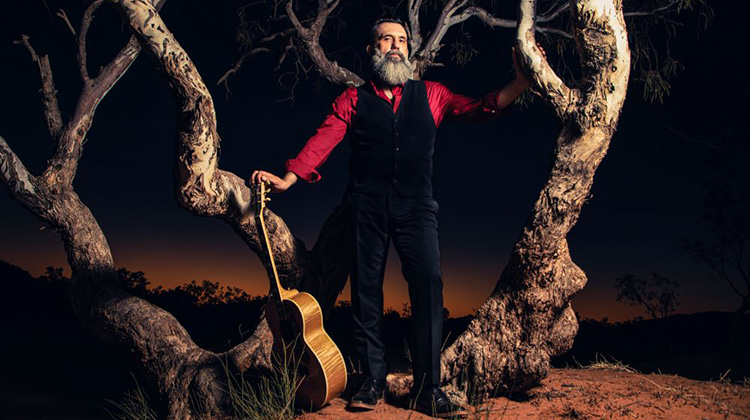
It is in this context that the IPA Schools Program, in collaboration with musician and songwriter Colin Lillie, has developed This Land, a free educational song and classroom resource focused on belonging, shared identity, and gratitude for Australia’s story.
This Land is not a lesson in politics. It does not ask teachers to take sides in contested debates or to promote particular policy positions. Instead, it offers something refreshingly simple: a way to invite students to reflect on place, community, and shared national belonging.
The song’s central message - “We belong to this land” - resonates across backgrounds and experiences. It speaks to students whose families arrived centuries ago and those whose journeys are recent. It affirms Australia as a shared home shaped by history, effort, and opportunity.
For teachers, This Land is designed to be classroom-ready, with no complex preparation required, adaptable, suitable for use across year levels and subject areas, supportive, encouraging calm discussion rather than conflict and inclusive, reinforcing shared identity without erasing difference.
Teachers can use the song as a starting point for conversations about history, geography, civics, or creative expression or simply as a moment of collective reflection that strengthens classroom cohesion.
Reducing Pressure, Not Adding to it
One of the most consistent messages from teachers is that they do not want more to manage. They want clarity, balance, and resources that support learning rather than intensify tension.
This Land is offered in that spirit. It is not prescriptive. It does not demand particular interpretations or outcomes. It trusts teachers to use their professional judgment and adapt the resource to their students’ needs.
At a time when classrooms can feel fragmented by competing narratives and emotional intensity, This Land offers a moment of unity. It reminds students that, despite differences, they share a place, a civic inheritance, and a future.
Supporting Teachers to Teach with Confidence
Teachers should not be expected to carry the weight of national division or cultural conflict. Their role is to educate, not to resolve every social tension or ideological dispute.
Education works best when it gives students knowledge, perspective, and confidence and when teachers are trusted, respected, and supported in their professional role.
Resources that reinforce belonging, gratitude, and shared understanding can help restore balance to classrooms and reduce the emotional burden placed on teachers and students alike.
Australia’s story is not perfect. No nation’s story is. But it is a story worth knowing and teaching with honesty and confidence. It is a story of struggle and achievement, failure and progress, and extraordinary civic success.
Teachers, who shape young Australians’ understanding of that story every day, deserve resources that support them in this vital task.
This Land is offered as a contribution toward that goal. A practical, positive resource designed to strengthen cohesion, reduce anxiety, and remind students that they belong.
Because education should build confidence, not despair.
Because teachers deserve support, not blame.
And because this land - our shared home - deserves to be taught with honesty, confidence, and gratitude.
Schools are invited to sing ‘This Land’. Free sheet music, the opportunity to participate in ‘Australia Sings This Land’ COMPETITION and other free teaching resources can be found at schoolsprogram.org.au
Watch the music video here.
Colleen Harkin is the Director of the Institute of Public Affairs’ Education Programs