


Starting a Business is a Future Present Essential Skill
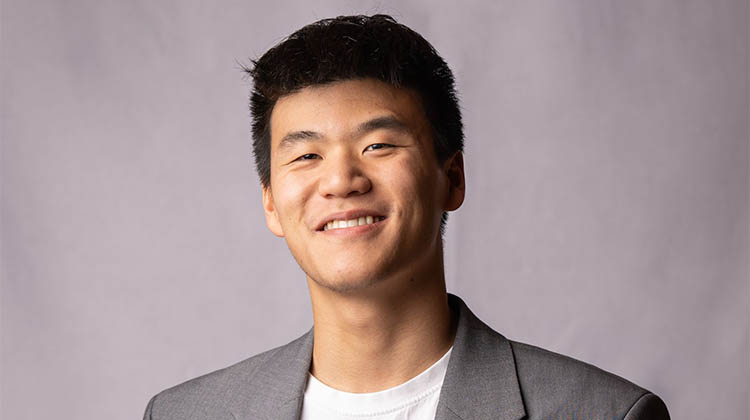
Today's career is dead. Young people entering the workforce are expected to hold 14–17 jobs across their lifetime. Yet most education still prepares them for a linear path that no longer exists - one employer, one skill set, one lane. That mismatch is leaving young people exposed. And AI is accelerating the gap.
The future of work belongs to those who create things and adapt fast. For decades the advice was specialise - deep expertise in one lane was your security. That's over. AI is collapsing the cost of specialisation, and the generalist who thinks across disciplines, communicates well, and moves quickly is now more valuable than the specialist who does one thing brilliantly.
The barriers to starting something have almost disappeared too. What once required a team, investors, and specialists can now be done by one person with a good idea and the right tools. The next generation could be the first where building something of your own is more accessible than getting a job.
So, if anyone can build, what separates people? Two things: creativity and adaptability.
Creativity isn't just art. It's seeing a problem others ignore, connecting ideas nobody has tried, and caring enough to pursue it. AI can execute brilliantly - but it can't notice what matters. It can't have a hunch. That spark is yours.
Adaptability means learning new tools, wearing multiple hats, and shifting when the landscape changes. The people who thrive won't be those who mastered one skill - they'll be those who mastered learning itself.
Make a Move
Australian kids are far more entrepreneurial than we give them credit for. Almost every young person I work with already has an idea. Something they're already doing, or desperately want to do. What they're missing isn't ambition, it's permission. They've been conditioned to believe that business requires money, credentials, the right connections, or a perfect idea that nobody can poke holes in. So, they wait. And waiting kills more businesses than failure ever does.
What I hear consistently is that they don't want a job - they want to make money from something they love. They've watched their parents grind through careers, leave during the Great Resignation, and now they want something different.
Fear of judgment is the biggest barrier to starting a business. In Australia especially, tall poppy culture hits young. Putting yourself out there with an idea feels genuinely risky when your peers are watching. Failure isn't just failure - it's public, and that keeps so many ideas locked in notebooks.
Then there's the myth that you need money before you can start. Most young people believe they need investment, a perfect product, and a business plan before they're allowed to begin. None of that is true, but nobody has told them.
Underneath it all is something simpler: they don't believe their idea is good enough. Not yet. Not compared to what they see online. So they keep refining privately, waiting for certainty that never comes.
The tragedy is we've never lived in a better time to start something with nothing. The tools exist. The access exists. What's missing is someone telling them that the idea they already have is worth backing, and showing them the first step.
Future Minds Network
Future Minds Network runs a 6-week program where students build a real business from the ground up. From day one they're applying design thinking, prototyping ideas, and solving real problems.
Students aged 15-18 join a cohort of peers from schools across their region and are given a real-world problem to solve. Working in inter-school teams, they build an actual business venture from the ground up - developing a business model, testing prototypes, and refining their idea against real industry feedback.
Along the way, they attend interactive workshops covering design thinking, prototyping, and problem-solving, and explore STEM career pathways like software development, engineering, and data science. They meet regularly with industry mentors - engineers, founders, data scientists - who give honest, practical guidance and open doors the students didn't know existed.
At the end of the program, they pitch their business live to industry experts, educators, and investors. Many do it for the first time ever. Most surprise themselves. The top teams receive microgrants to continue building, plus access to our retail activation program - free physical space at shopping centres, festivals, and retailers to sell their products. Many become active micro-entrepreneurs, running real businesses long after the program is done.
Should it be taught in schools? Absolutely - and as a core subject. Entrepreneurship and STEM are a way of thinking. When a student generates their first dollar from something they built or stands in front of an industry panel and holds the room, something shifts. They stop waiting for permission. That's the whole point.
The transferable skills - problem solving, communication, adaptability, initiative - are exactly what employers say they can't find. We're preparing kids for the 14 to 17 jobs they'll actually have across their lifetime, and the mindset to navigate all of them.
Standout Successes
One student grew frustrated with his school app - so he built a better one, onboarded his entire school of 1000 students, and was recently acquired by a major edtech company.
Another, during COVID, started writing encouragement letters to elderly residents to tackle social isolation. From that one act of kindness, she grew a team of 1,000 volunteer writers and sent 10,000 letters to people who had nobody to support them.
One mentor came in to work with our students and left the experience so fired up that shortly after he quit his job and started his own education company. He raised a $1million for the company and he reached over 100,000 students. We didn't set out to change his life. But that's what happens when you put passionate young people in a room and take them seriously.
We can't take credit for what they had inside them. But we gave them a space where they were taken seriously.
Practical Entrepreneurship Education is Critical for Young People
Entrepreneurship education is the only subject that actually mirrors how the real world works. You identify a problem, test an idea, face rejection, iterate, and try again. You work with people you didn't choose, under pressure, toward an outcome that isn't guaranteed.
And the results show up in ways grades never capture. The student who builds something real stops asking whether they're smart enough. The one who pitches to an industry panel stops being afraid of a room. The one who gets a microgrant for their idea stops waiting for someone to give them permission.
We're not teaching young people to become entrepreneurs necessarily. We're teaching them to think like ones - and that mindset is the most transferable thing we can give them, whatever path they end up taking.
The Importance of Empowering the Next Generation with Skills, Resilience and a Sense of Purpose
We have a habit of underestimating young people. We design systems that ask them to wait - wait until you're older, wait until you have experience, wait until you're ready. But readiness doesn't come from waiting. It comes from doing.
I know this because I almost became a statistic. At 16, disengaged, struggling, I was on the wrong side of that gap. It wasn't a teacher or a textbook that pulled me back - it was being put in a room where my idea mattered and my contribution was real. That changed everything for me.
I see the same thing happen with our students constantly. A teenager who barely speaks in class stands in front of an industry panel and holds the room. A kid who was told he wasn't academic builds an app, onboards his entire school, and gets acquired. A young woman during COVID decides the elderly shouldn't be alone and builds a movement of 1,000 volunteer writers. Nobody gave them those capabilities. They already had them. We just created the conditions for them to show up.
That's what skills, resilience, and purpose actually look like in practice. The young people I work with don't lack potential. They lack environments that take them seriously. When we change that - even for six weeks - what emerges is remarkable. Every single time.
Starting Future Minds Network
At 16, I nearly completely disengaged from school. It was exposure to entrepreneurship education - learning by building, solving problems, working on real ideas - that re-engaged me and reshaped my trajectory.
Growing up, I watched my parents juggle multiple jobs just to make ends meet. Education was drilled into me as the way out, the way up. And for a while, it worked - I was a good student. Then at 16 I moved to a new school, struggled to find my footing, failed a subject, and something broke. It didn't feel like an academic setback. It felt like the whole story I'd been told about how life worked had stopped making sense. I disengaged completely.
Then an excursion came up that meant getting out of class. I took it without thinking much about where it was going. It put me in a room with doctors, lawyers, and engineers trying to solve the healthcare crisis - all within 48 hours. A hackathon. People building, prototyping, failing, trying again. Learning that felt urgent and alive. That was the moment everything shifted.
I went back determined to recreate that feeling and organised an entrepreneurship program across five schools. Not because someone asked me to, but because I needed other kids to feel what I had felt in that room. That's where Future Minds Network started.
The Forbes 30 Under 30 Win
It's an interesting process, you have no idea if you've made it until the day it's published. A friend texted me out of nowhere saying they'd seen my name on the list. It was just an ordinary Tuesday until that message came through.
But the recognition meant a lot. This work happens quietly - in school halls, in workshops, with young people who the system has largely written off as too young to do anything meaningful. There's no scoreboard. The outcomes take years to show up. So when something like 30 Under 30 shines a light on it, it validates the work and the young people at the centre of it. It says this matters. They matter. And that's worth more than any award.
The Hub Flexi-Impact Program - an Innovative Way of Housing a Business
Hub has locations across the city (Melbourne) so wherever I am there's always somewhere to set up. The community aspect surprised me most. You're working away and end up in a hallway conversation with someone building something completely different but equally driven by purpose. Those moments are hard to manufacture. After spending a lot of time heads down on your own, being around other founders who genuinely care about what they're building is quietly energising.
The Flexi-Impact Program gave us breathing room to stay focused on the mission rather than getting pulled into finding a home for our organisation. For us at this stage that's been really valuable.