


Standards Olympiad in Korea - Teams Sought
Nothing really happens without setting standards, they underly the creation of anything you might think of in every activity and industry.
Standards can help create consistency across products, services, and processes, improve safety, reliability, and performance in everyday operations, reduce errors, defects, and inefficiencies by providing clear expectations and enable interoperability between systems, tools, and organisations.
There is a science to setting standards and rich career pathways can be accessed through knowledge of them, how they are developed and their intent.
One might find themselves in a job in compliance, auditing, quality assurance, and risk management, contributing to national or international standards bodies, in product development, where standards guide design and testing or in regulatory affairs or policy development or consulting.
Learning about standards, and their role in society, can help teenagers build confidence in problem solving and decision making by showing them how clear rules, quality expectations, and shared frameworks make complex tasks easier to navigate.
The Standards Olympiad is an international competition where high school teams tackle real world problems by applying standards to develop practical, innovative solutions.
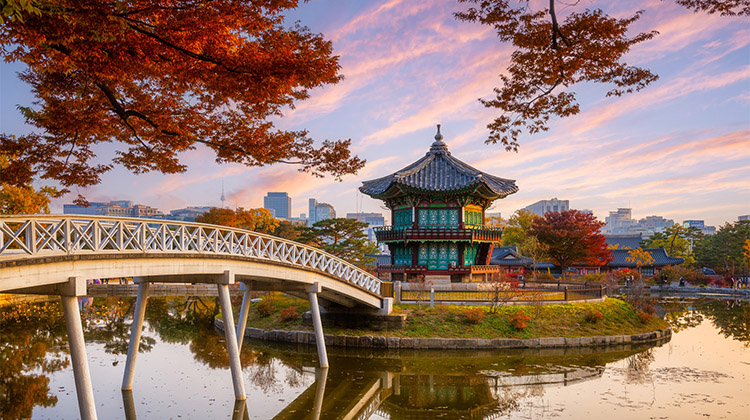
Held annually in Seoul, it brings together students aged 13 to 18 who work in small teams to analyse scenarios, interpret relevant standards, and present their reasoning to judges.
Activities typically include problem solving challenges grounded in safety, technology, and sustainability, along with structured preparation sessions and presentations that test communication and teamwork.
“The experience offers significant benefits: students build critical thinking skills, learn how standards shape everyday life, and gain confidence in applying structured frameworks to complex issues. It also provides international exposure, opportunities to collaborate with peers from around the world, and recognition from national standards bodies, all while strengthening their understanding of how standards support innovation and global cooperation,” says Kareen Riley-Takos Chief of Engagement, Standards & International Relations at Standards Australia.
Last year’s competition was held over 3 days. Students participated in an opening and closing ceremony, attended a special lecture, competed in the contest itself, and wrapped up with a presentation and awards ceremony.
“We are seeking teams made up of three students and one supervising teacher in the 13-15 and 16-18 age groups. This opportunity is ideal for students who are interested in STEM and want to build strong skills in problem solving and innovation. Many young people are looking for future focused skill development and real-world learning experiences, and this program offers exactly that. It’s also an incredible chance to represent Australia on the international stage while travelling to South Korea.”
Topics from last year were:
13-15 years: smart devices - methods for evaluating voice recognition performance.
6-18 years: artificial intelligence (AI) - guidelines for the ethical use of AI technology.
There are cash and merchandise prizes, the top two prizes have been supplied from the Korean Prime Minister and the Korean trade, industry and energy minister.
“Although Australia has always been welcome to participate in the Standards Olympiad, this is the first year we’ve actively pursued involvement. With new leadership at Standards Australia, there is a renewed focus on building impact and strengthening public trust in the role standards play across society. As part of this commitment, we’re prioritising clearer communication about the value of standards and the opportunities they create.
“The Olympiad stood out as a powerful way to offer teenagers an international experience while developing a skill set grounded in real world problem solving and global collaboration. We’re incredibly excited to select the Australian team and watch them take on this challenge on the world stage,” says Riley-Takos.
Australia holds a strong position in the global standards landscape, with growing momentum behind its contributions. As a long standing participant in international standards development through ISO and IEC committees, Australia provides expertise across diverse sectors ranging from energy to digital technology. Having operated since 1922, Standards Australia brings deep experience in developing standards and engaging with industry.
For more visit Standards Australia