


Sparking Indigenous Students’ Interest in Built Environment Careers
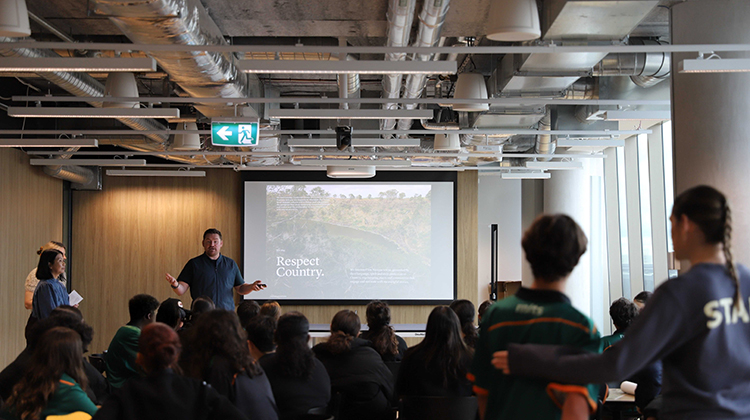
The architecture industry is keen to attract more First Peoples as it evolves to shape a more inclusive and resilient built environment. Since 2021, designing with respect for Country has been a core competency for all architects in Australia, and developing these skills has become a strong focus of their tertiary education. But generational inequities continue to create barriers to study and work, and with relatively few First Nations practitioners working in the profession it remains a relatively unknown career path for secondary students.
A recent collaboration between ClarkeHopkinsClarke Architects (CHC), Science Gallery Melbourne’s STEM Centre of Excellence and the University of Melbourne aimed to help change that. The trio curated a Design Day Out for Year 7 and 8 students from Melbourne Indigenous Transition School (MITS). Located on Wurundjeri Country in Richmond, the school attracts students from remote and regional communities across Australia.
The experience began at Creative Shapeshifter, the first solo exhibition by Dharawal and Yuin designer Alison Page, which was curated by the University of Melbourne and supported by educational resources sponsored by CHC. Next stop was EMERGENCE[Y] at Science Gallery Melbourne. This exhibition is conceived as a living ecosystem and explores adaptation in a world in flux, from First Nations knowledge of the Birrarung to resilient fungal fashion.
The Design Day Out culminated at CHC’s studio, where students were introduced to the ways architecture and landscape can shape the places they love. After a grounding exercise to reflect on what Country means to them, they worked in small groups to try designing with Country for themselves in a one-hour model-making workshop facilitated by architects from CHC’s educational design team and Associate – First Nations Lead James Gilliland (Yorta Yorta). The messy, fun, imaginative experience allowed students to unpack the design opportunities of a real site and design diverse spaces capturing the most important elements of Country and belonging for them.
MITS Year 8 classroom teacher Caity Agra said the culturally safe environment gave students valuable exposure to a creative career most wouldn’t have considered before. “Our kids absolutely loved coming in and working with the architects at CHC,” she says. “Everyone was very welcoming and the kids felt supported and well looked after throughout the session. For most of our students, coming into CHC was their first exposure to architecture. It was awesome for them to experience a culturally safe and respectful session that was centred around designing on Country.”
James Gilliland says the benefits flowed both ways. “It felt like a beautiful full-circle moment for me,” he says. “I didn’t know anything about architecture until an architect came to my school and talked about it, and it sparked something in me. This workshop was such a rewarding experience. Hopefully we’ve planted a seed with the next generation. For anyone with a strong sense of social justice, architecture offers amazing opportunities to help people and reinvigorate culture.”
EMERGENCE[Y] at Science Gallery Melbourne runs until 5 December.