


Small Changes Can Be Life-Changing: What Educators Can Learn From My University Experience
My journey of becoming a Biomedical Science student is a little different from most.
Growing up, I spent a lot of time in hospitals and was given a one per cent chance at survival at one point. I was cared for by extraordinary doctors and healthcare professionals who not only helped me survive, but helped me live a healthy and happy life.
Then, towards the end of high school, I became critically unwell again. Spending time in intensive care meant I was unable to finish Year 12.
Experiencing the genuine compassion of doctors that supported me through the most challenging times was my turning point. I had been given a second chance at life, and I felt a duty to give back to the profession that made it possible.
Today, I am completing my second year of a Bachelor of Biomedical Science degree at Deakin University in Melbourne, with the goal of pursuing the field of pediatric cardiology.
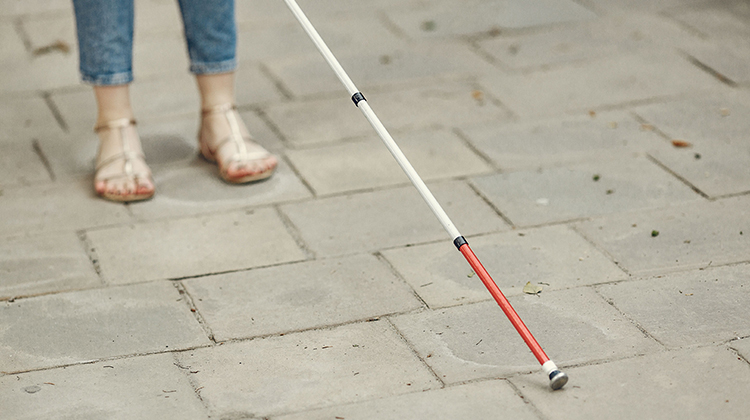
I am also legally blind, with only two per cent vision in my left eye. I’ve been told I am one of few Australian students completing these studies with a visual impairment.
At first, I thought my vision might be a barrier. But Deakin University has never approached accessibility as a problem to solve or a box to tick. Whenever a challenge arises, the response isn’t ‘you can’t do this’. Instead, it’s ‘let’s find a way how.’
Technology has been a big part of this. When my sighted peers look through a microscope, they can simply observe what is on the slide. For me, the university’s disability liaison team developed a system where microscope images are captured by a camera, displayed on a computer, and analysed using artificial intelligence. It then describes what appears to me.
Technology also helps me analyse graphs and visual concepts. On top of all this, the university converts all of my learning materials into formats that work with my screen reader – from lecture slides to textbooks and other learning materials.
The university has created incredible tactile models of viruses, cells and biological structures so I can physically explore concepts that others see visually. Staff have used everything from 3D printing to wire, beads, nail polish and sand to create these learning resources. My laboratory manuals are also produced in braille. Academic support workers help ensure I don’t just access content, but truly understand it.
As a visually impaired person, mental fatigue is a big challenge. This support alleviates this, so all I have to worry about is my coursework.
Another major part of my university experience is my Seeing Eye Dog, Kylie. She helps me navigate the world and the university campus, with confidence and independence. We’ve developed a system where she takes me to key locations, getting around busy and chaotic places with ease. Kylie is also an essential part of how I learn and participate. Staff organise a crate for Kylie for every laboratory class, so she has a safe place to rest during class. In some laboratory spaces, Kylie even wears little protective socks so she can safely enter. These seemingly minor accommodations make a world of difference for both of us.
Group assignments have been made optional for me, and I always take the opportunity because it’s good practice for when I join the workforce. But it goes both ways. It’s also a learning opportunity for my peers to experience what it’s like to work alongside a visually impaired person.
Deakin University has done an impeccable job making my university experience not just accessible, but enjoyable. This is the standard all universities should be aiming for.
I hope my experience is an example for other institutions to give opportunities to more students who are visually impaired or have a disability. If my story could also inspire or motivate one young person to pursue science, that’s my dream come true.