


Sleep-Deprived Schools: Why the Best Leaders Join the Anti-5AM Club
How did you sleep last night?
If you are a teacher or school leader, the honest answer might sound familiar. You stayed up late finishing planning or replying to emails. You woke once or twice during the night. And when the alarm went off, you felt like you could easily sleep for another hour.
If that sounds familiar, you are not alone.
Recently I was on a podcast discussing sleep and wellbeing in the workforce. During the conversation we explored a confronting reality. Many professionals are operating on far less sleep than they need.
Teachers and school leaders tend to give a lot of themselves. The work rarely ends at the final bell. Lessons are refined late in the evening. Emails are answered after dinner. Assessment quietly builds on the corner of the desk. Even when the laptop is closed, many educators continue thinking about students, families, and the next day’s lessons.
Sleep is often the first thing sacrificed.
The problem is that sleep is not a luxury. It is one of the foundations of how we think, teach, lead, and care for others.
The numbers are sobering. Only about 31 percent of workers report that they sleep well. Around 36 percent report ongoing sleep difficulties, and roughly one in six workers experience severe insomnia-type problems. These challenges include difficulty falling asleep, waking repeatedly during the night, waking too early, or waking up feeling exhausted despite spending enough time in bed.
Think about that in the context of a school staffroom. In a team of thirty teachers, five or six colleagues may be experiencing significant sleep disruption. In a profession that depends on attention, patience, and emotional presence, that matters.
Anyone who has taught after a poor night’s sleep will recognise the difference. Your patience is shorter. Your thinking is slower. The small decisions that normally come easily suddenly require more effort.
Sleep deprivation affects the very capacities that good teaching depends on. Memory, concentration, and decision making all decline when we are fatigued. Teaching requires hundreds of rapid decisions throughout the day. Teachers constantly interpret student behaviour, adjust explanations, respond to questions, and manage the dynamics of the classroom. When sleep is compromised, the mental clarity needed for this work becomes much harder to sustain.
There are wider consequences as well. Workers experiencing insomnia report lower job satisfaction and engagement. They are also more likely to mentally disengage from their work and more likely to consider leaving their job altogether. In education systems already dealing with teacher shortages, this link deserves attention.
Sleep disruption is also closely connected to mental health. Workers experiencing high levels of insomnia are 6.3 times more likely to report high job anxiety and almost five times more likely to report job-related depression. Wellbeing measures tell a similar story. On the World Health Organization’s WHO-5 Wellbeing Index, people who sleep well score around 57 percent, while those experiencing high insomnia score about 41 percent. That represents a substantial drop in overall wellbeing.
One factor stands out strongly in the research: burnout.
Workers experiencing severe burnout are more than three times as likely to report serious insomnia. This is particularly relevant for educators. Teaching and school leadership involve sustained emotional labour. Educators carry responsibility for learning outcomes, student wellbeing, family relationships, compliance expectations, and increasing administrative demands.
Australian teachers are also working within systems facing rising workload pressures, growing pastoral responsibilities, and persistent staffing shortages. Over time these pressures accumulate.
When burnout rises, sleep often deteriorates. Once sleep deteriorates, recovery becomes far more difficult. Burnout disrupts sleep, and poor sleep intensifies burnout. The cycle feeds itself.
Interestingly, insomnia does not appear to be limited to a particular age group or career stage. Early-career teachers, experienced principals, classroom teachers, and middle leaders can all experience it. In other words, sleep disruption cuts across the entire profession.
This points to a larger issue. Sleep problems are not simply individual lifestyle challenges. They are also shaped by the cultures in which people work.
Education has long celebrated dedication and sacrifice. Early mornings, late nights, and weekend work are often quietly accepted as signs of commitment. Yet chronic exhaustion does not produce better teaching or better leadership.
Sleep deprivation reduces patience, empathy, creativity, and clarity of thinking. These are precisely the qualities that effective teaching requires.
This is why I sometimes talk about the idea of the “Anti-5AM Club.” Not another productivity movement encouraging people to wake earlier and push harder. Instead, it is a reminder that sustainable leadership requires rest.
Improving sleep often begins with small practices. Maintaining a regular sleep schedule helps stabilise the body’s rhythms. Reducing late-night screen exposure allows the brain to wind down. Taking short breaks during the day can prevent stress from accumulating. Even the occasional power nap can help restore mental energy.
But individual strategies alone are not enough. Schools also need to examine workload expectations, meeting schedules, and communication patterns. Organisational culture plays a powerful role in shaping whether staff can sustain healthy routines.
School leaders often search for complex strategies to improve staff wellbeing and performance. Yet one of the most powerful may be far simpler: creating conditions where teachers can sleep well enough to do the work they care about.
A good night’s sleep.
I’d love to invite you to the Wellbeing for Future Focused Schools Conference at the National Education Summit later in the year. I’ll be sharing practical tools, lived insights, and reflections to help you protect your energy, sustain your passion, and create a culture of care in your everyday practice.
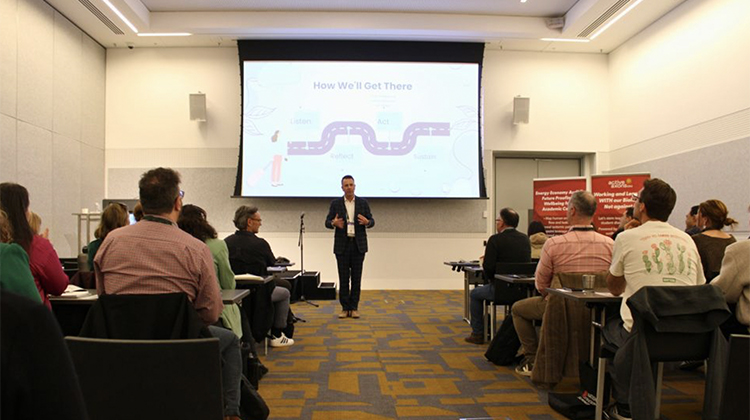
Andrew is speaking at the Wellbeing for Future Focused Schools Conference on ‘The Anti 5am Club‘.
View the Full Brisbane Conference Program Here.
View the Full Melbourne Conference Program Here.