


Relationship based Education Model Keeps Kids in School
The Productivity Commission's Report on Government Services 2026 confirms Australia spent $1.1 billion on youth detention in 2024-25, at a cost of $1.3 million per child per year. Around 85 per cent return to sentenced supervision within 12 months.
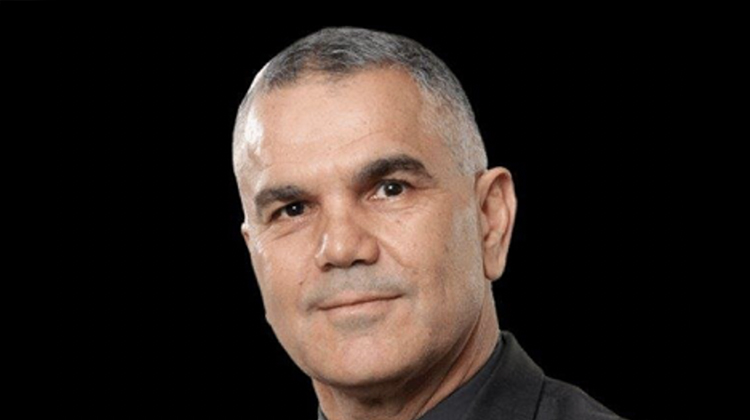
Dr Chirs Sarra's Stronger Smarter Institute has spent 21 years demonstrating a different trajectory is possible: at Cherbourg State School in rural Qld, under his leadership, attendance rose from 62 per cent to 94 per cent. The Stronger Smarter Institute has since trained almost 6,000 leaders across more than 1,300 schools nationally.
Sarra argues that the boarding school model - the current default for remote secondary students - serves only a fraction of those who need it, and that for many who do access it, the severance from family, country and culture undermines the very foundation of sustained engagement.
The Stronger Smarter Virtual Secondary College proposes to deliver quality secondary education without that severance: wrapped around the individual, on country, with culture intact.
Research on the diffusion of change - widely associated with the tipping point principle - shows that once 25 per cent of a system adopts a new practice, uptake becomes self-sustaining.
The ideas behind Stronger Smarter could be implemented in a wider context. High Expectations Relationships ideas from the program could be woven into the ways the country addresses its indigenous people. $7 million is The Stronger Smarter Institute's estimate of the cost to deliver its High Expectations Relationships leadership programs to 25 per cent of Australia's low-SES and remote schools.
Dr Sarra says, “When you change expectations, you don't just change outcomes. You change identity. A change from chronic disengagement and underachievement to strong and smart.
“Last year, I was in Broome, in the Kimberley, an Aboriginal woman stood up in the audience and said: ‘Chris, I want to thank you for bringing Stronger Smarter to the Kimberley. I also want to say - this is not a new way. This is our old ways. This is the way of our old people. Thank you for reminding us'.
“This work is not about introducing something new. It is about remembering something old. It is about returning to a way of being where relationships matter, where expectations are high and grounded in respect, where people are not seen as problems to be solved, but as human beings to be embraced and honoured.”
The idea of the art of the relationship is at the heart of Stronger Smarter. The real work is the relationship.
When relationships are strong, trust builds. When trust builds, expectations rise. And when expectations rise, people begin to live into their potential.
But when relationships are weak, or transactional, or driven purely by power, we see something else. We see disengagement. We see disconnection. We see people withdrawing from systems that were never designed with them in mind.
“When we undermine the humanity of others, we diminish something in ourselves. When systems are disconnected from people, and abject failure gets in our face, the colonial default is to talk about outcomes without understanding the human experience of those we serve. We hear this euphemised by terms such as 'practical reconciliation,' but we get stuck in this colonial default, entrenching despair rather than nurturing hope. We remain stuck by continuing to do things to people - not with them.”
Governance is not just about power. It is about the ethical form that power takes when it comes into contact with people's lives.
Nowhere is this more evident than in how we approach secondary education in remote Australia. We have built a system that we tell ourselves is working. We say boarding school is the answer.
Generally speaking, for every 100 young people, maybe 30 get that opportunity. And of those 30, perhaps only a fraction will complete their full journey. The rest are left behind, with very little real choice.
We call it opportunity. But for most, it is not.
When we take young people and we remove them from their family, their country, their culture, we are not just changing where they learn. We are changing who they are allowed to be.
When young people are disconnected from identity, from belonging, the connection that keeps them strong begins to break, and fewer pathways remain open to them. Early research is letting us see this, and we must not ignore it.
“This is where relational sovereignty matters - not as a slogan, but as a way of being. The ability for people to remain deeply connected to who they are - their culture, their family, their country - while fully participating in the modern world. To be all of who they are.
“When we design systems that honour this, we don't weaken people. We strengthen them,” he says.
Sarra wants to use technology to deliver world-class education without breaking the connections that give young people strength. That is the vision of a Stronger Smarter Virtual Secondary College.
“We can be a country where young First Nations children walk tall, grounded in the oldest living cultures on earth, and ready for modern futures. We can be a country where teachers walk into classrooms every day, ready to meet young people in high expectations relationships, believing in them without exception.
“We can be a country where power meets people in a way that honours their humanity, not diminishes it. We can be an Australia where high expectations relationships are the standard, not the exception.”