


Nurturing Creative Thinkers Through Speech Analysis - Empowering Young Learners to See Language Differently
In contemporary classrooms, creativity is no longer a desirable extra. It is a cognitive necessity. For high achieving and gifted learners in particular, opportunities to think divergently, interrogate meaning, and analyse the world through multiple lenses are essential to sustaining deep engagement and building advanced cognitive pathways. One powerful way to foster these capacities is through the close study of speeches delivered by influential figures whose messages continue to shape public discourse.
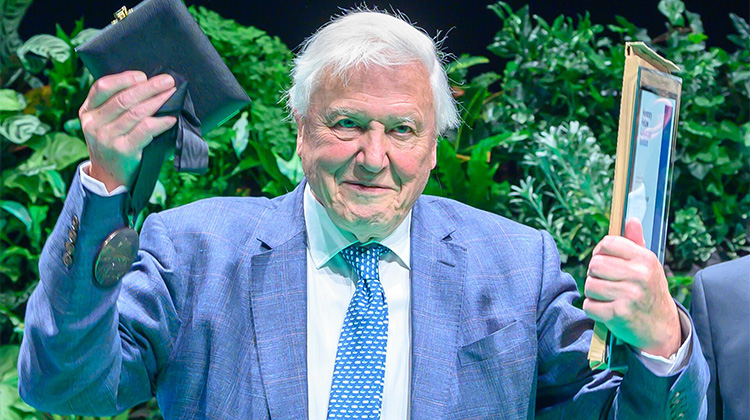
In a recent enrichment program for high-achieving primary students, we explored the work of two globally recognised activists, Greta Thunberg and Sir David Attenborough. Both speak urgently about the environment, yet they do so through distinct linguistic choices, tones, and persuasive devices. Their speeches provided a rich foundation for students to examine how language can inform, inspire, provoke, and challenge. More importantly, the task invited students to develop creative and critical habits of mind that extend far beyond a single unit of study.
Why Speeches? Why Activists?
Young learners are naturally attuned to fairness, justice, and the wellbeing of the world around them. Presenting speeches by Thunberg and Attenborough gave students access to two generational perspectives on the same global issue. Thunberg’s urgent, emotionally charged appeals contrast with Attenborough’s measured, authoritative delivery. These differences prompted students to think about how voice, word choice, rhythm, and structure shape meaning.
For gifted and high-achieving students, this kind of comparative analysis supports advanced metacognition. They are not only consuming the message but also interrogating how it is constructed. They begin to understand that language is a deliberate craft, and that every persuasive device; repetition, emotive language, rhetorical questions, emphasis; serves a communicative purpose and call to action.
The Power of Scaffolding in Creative and Critical Analysis
While the task appears sophisticated, its accessibility relied on careful scaffolding. High-ability students benefit from being stretched, but stretch must be paired with structure. Over several sessions, we broke down the analytical process into manageable steps.
Students first explored the background of each activist. Understanding their motivations and historical context allowed students to appreciate why their speeches carried such weight. From there, we examined short excerpts to identify key persuasive techniques. Students discussed how certain phrases made them feel, what images were created in their minds, and how tone affected their interpretation.
This step-by-step approach empowered students to approach complexity with confidence. By the time they were ready to compare and contrast the speeches in full, they were not overwhelmed. They had the tools, the language, and the curiosity to explore the content independently.
For young high achievers, scaffolding is not about simplifying the task. Rather, it supports them to access higher order thinking earlier and more confidently. Through guided discussion, graphic organisers, sentence starters, and modelling, students developed a framework they can now apply to any text, written or spoken.
Creative Thinking Through Language
Creativity in literacy is often misunderstood as imaginative writing alone. Yet creativity also involves perceiving ideas from new angles and generating original interpretations. When students analyse a speech, they are taking apart someone else’s creative work in order to build their own insights.
The process naturally invites creative thinking. Students asked questions such as:
Why does Greta Thunberg repeat certain phrases so often?
How does Sir David Attenborough sound calm even when talking about something serious?
What images come to your mind when you hear their words?
How would the message change if the tone were different?
These questions demonstrate fluency, flexibility, and elaboration, which are core attributes of creative cognition. Students were not simply identifying devices; they were imagining alternative meanings, playing with shifts in voice, and experimenting with how language shapes emotion.
In enrichment settings, where gifted students often crave depth, this type of thinking gives them space to move beyond the literal. They become not just readers or listeners, but interpreters and creators of meaning.
Benefits for High-Achieving Learners
Engaging young high achievers in speech analysis offers a wide range of educational benefits:
• Advanced language awareness. Students gain a deeper understanding of how vocabulary, syntax, and rhetorical choices influence communication.
• Enhanced critical thinking. They learn to justify opinions with evidence and to evaluate the effectiveness of persuasive strategies.
• Creative interpretation. Students develop the confidence to take intellectual risks and explore ideas in unique ways.
• Metacognitive growth. They begin to reflect on how they think, not just what they think.
• Empathy and perspective-taking. Analysing the work of activists encourages students to consider different viewpoints and global issues.
• Preparation for future academic pathways. Early exposure to analytical frameworks supports later success in reading comprehension, essay writing, and oral communication.
By introducing analysis through the accessible medium of speeches, we build the foundation for sophisticated literacy skills while nurturing curiosity and creativity.
Opportunities for Create Thinking
When gifted and high-achieving students are offered opportunities to explore complex texts in meaningful ways, they grow as thinkers. They learn that language is powerful. They learn that ideas evolve. They learn that their interpretations matter.
Most importantly, they learn that creativity is not confined to artworks or stories. It is embedded in the way we analyse, compare, question, and imagine new possibilities.
The success of this enrichment unit highlights what can happen when young learners are challenged with worthy texts and supported with deliberate instructional strategies. Through the words of Greta Thunberg and Sir David Attenborough, students discovered that creative and critical thinking are deeply connected. They learned to look at language differently, and in doing so, they learned to look at the world differently too.
Lanella Sweet is an experienced educator and researcher specialising in gifted education, twice exceptionality, and talent development. With more than thirty years of teaching across primary and middle school settings, she has focused her practice on recognising student strengths, supporting neurodiverse learning profiles, and designing inclusive pathways that nurture potential. She holds a Bachelor of Education and two Master of Education degrees, in Mathematics and Gifted Education.
Lanella’s work includes developing enrichment programs, collaborating with teachers to refine identification and support practices, and contributing to professional and academic writing on inclusive pedagogy. Her research highlights the importance of understanding the whole child and fostering environments where diverse learners can thrive.
Image by Nick.Thirteen - Own work, CC BY-SA 4.0, https://commons.wikimedia.org/w/index.php?curid=84538535