


Laundry Program Increases School Attendance
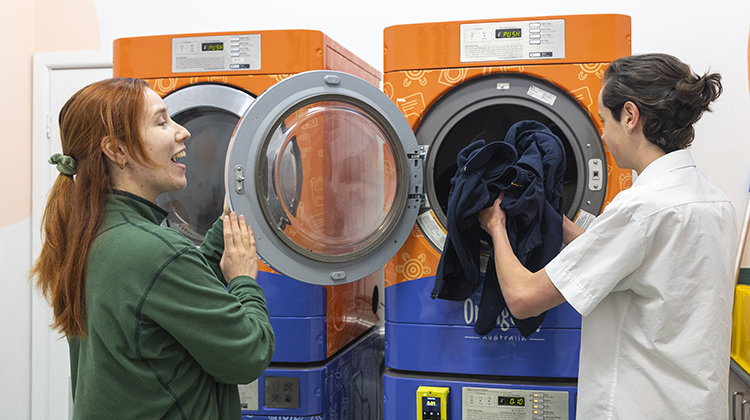
Many students lack a stable home life and chaotic homes mean things like regular meals and washing don't get done. There are direct effects on attendance and willingness to engage with school simply because showing up looking scruffy is humiliating.
Unmet basic needs, such as hygiene poverty, severely impact student equity and learning outcomes. Affected students miss an average of 13.84 extra school days annually and experience significantly lower classroom engagement, leading to poorer academic performance and potential long-term learning deficits for 61% of these students.
The Orange Sky School Laundry Program is a practical, school-based approach which offers straightforward support that respects student privacy while removing barriers to attendance and helping students build practical life skills.
By having school staff directly co-design the program and support these facilities on-campus, the school community is equipped to respond to the often-hidden disadvantages faced by young people who cannot safely or easily access typical off-site support services.
The Orange Sky School Laundry Program acknowledges the widespread existing strain on school resources - so all costs, including high-quality machines, installation, and comprehensive training are all included in the provision to schools.
The program began in 2023 when Frankston High School Business Manager, Carolyn, reached out to Orange Sky after identifying that a lack of clean clothes was causing students to disengage from their learning.
"There are students who are doing it hard at home, the parents are doing it hard. They don't always have access to a machine. Their machine may be broken at home. We have students who are in a situation where they're restricted in accessing water at home," says Carolyn.
It was seeing Orange Sky Co-Founder Lucas Patchett on a TV program that compelled Carolyn to reach out - initially for advice on what to do.
"They were wanting to come to school so bad that they were coming in the wet clothes, and I thought, how can I make this easier for them? What can I do to help support the students? If they want to come to school that badly, in wet clothes or in a dirty shirt, so they can be at school and be just like everyone else, then I'm going to find a way," said Carolyn.
As time went on, more and more educators shared that students can disengage from learning due to not having clean uniforms and/or clothes, leading to embarrassment, reduced attendance and a sense of not belonging.
"It's the difference between whether they come to school or they don't come to school. If they don't have clean clothes, they don't come."
Research supports these observations, with studies showing that hygiene-related issues can negatively impact young people’s wellbeing, contributing to isolation from peers, bullying, reduced attendance and lower educational attainment. 18 months on, Carolyn now reflects on the over 900 washes that have taken place at Frankston High School.
"Once they were told about Orange Sky Laundry here at the school, they actually were in tears and tears of relief that they were able to access and wash their clothes, not just their school clothes, but their clothes at home and their bedding was such a relief for them, that really hit home," she says.
“Accessibility of the service is such a key part of what Orange Sky does - we're always coming to existing hubs of people doing it tough, so they can access free laundry, connection and other essential services all in one place. We believe a similar approach is necessary to combat youth disadvantage at scale - make help services and resources truly accessible,” Katie Lavidis, Orange Sky School Laundry Program Specialist, says.
There are five School Laundry Programs active around Australia, and with the surge of response when it went to market, we have dozens more in the pipeline, two School Laundries in Victoria, and three in SEQ.
“We have been overwhelmed by the demand for this model, and we have big dreams on our mission to positively connect communities” Lavidis says.
“We aren’t looking for funding outside of our current grant. Decisions for the future of the program are currently in discussion.”