


Designing a Strong Start to the School Year
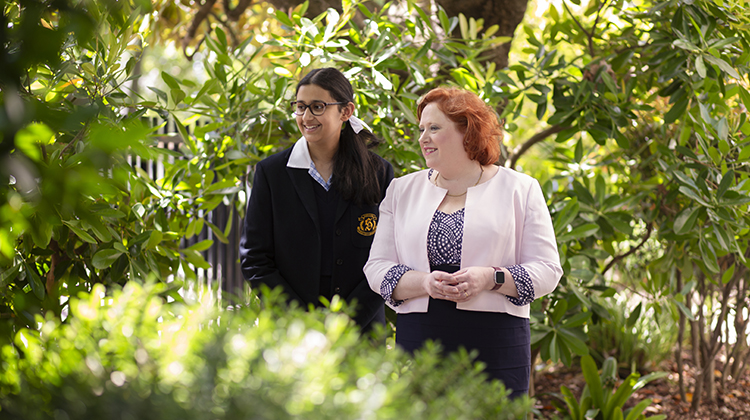
Heading into my third year as Principal at Strathcona Girls Grammar, with a lifetime of school year beginnings behind me, I’m choosing to lean into the chance to offer a perspective on leadership and how to set the tone for the year ahead. Afterall, I have never really left school. School has been the backdrop, the rhythm, the architecture of my life. And yet, from the principal’s chair, everything feels different. What I do know is this: the playbook is rewritten annually, sometimes monthly. Each new school year arrives like a fresh hue on the palette, recognisable in colour, yet unmistakably its own.
When I became Principal in 2024, trusted colleagues warned me the first year would teach me fast, the second would test my resolve, and the third would expose my leadership. They added, almost cheerfully, that it gets harder every year. Comforting stuff!
I’ve come to learn that the principal’s job is to remain responsive, to read the microclimates of a school, notice the subtle shifts in mood, expectation and confidence, and to steady and embrace the community. My decades in education matter, but they do not entitle me to certainty. They simply remind me that the work has always been relational at its core.
At those first gatherings and assemblies, you see hundreds of faces scanning yours, searching for signs of the year to come. They aren’t looking for perfection. That is overrated. They seek coherence and authenticity, someone who believes in something and intends to live it. In those seconds, you realise that young people read the world through the steadiness of adults and that steadiness has become an act of leadership in itself. How leaders set expectations, model values and communicate their vision in those early weeks shapes engagement, behaviour, and the learning environment for the year ahead.
With each passing year, I am more convinced that the success of a school year is shaped just as much by emotional and relational foundations as by curriculum. Belonging and connection are not sentimental extras. They are the pivotal strategic priorities. Students quickly decide whether school is a place where they are seen, supported, and challenged. Staff decide whether the year will stretch them meaningfully or exhaust them. Thoughtful early leadership can ensure these impressions are positive, setting the stage for a balanced productive and sustainable year.
In 2026, belonging to a community matters more than ever, not because students are more fragile, but because the world around them is more fragmented. If you create a community with belonging at its core, academic progress and community well-being will follow.
I see clearly that a sense of belonging cannot be left to chance. It must be designed thoughtfully, practised consistently, and offered with warmth and humour. The magic happens when it feels effortless to those who receive it.
There is another truth I have come to rely on: a vibrant school year depends on excitement and curiosity. They are not luxuries, but rather the human engines of learning. In a school, learning never stops, not for students and not for the adults who guide them. Each year must bring progress, experimentation and a willingness to refresh the familiar. Standing still is the only real risk. By balancing innovation with clear structures, leaders can maintain momentum while supporting staff and students sustainably, rather than reacting to crises as they arise. A contemporary learning ecosystem succeeds when we create new networks, open pathways for connection and invite questions that unsettle the predictable. The old rinse and repeat model belongs to another era.
A new age of co-creation is emerging, where students are active partners in shaping their learning and their pathways. When we listen to their insights, trust their instincts and invite them to help design what school and learning can be, we cultivate engagement and a profound sense of ownership. Education can no longer be something constructed merely for young people; it must be co-created with them.
The momentum of a new school year is not merely about administration or operations; it is deeply human. It is a privilege to guide young people as they learn about our world and their place in it. They deserve adults who have not succumbed to cynicism, who still believe in their capacity to contribute meaningfully to the world they will inherit, and who model generosity of spirit.
To all who shape and are shaped by our schools, I wish you a year of rich learning, strong connections and the confidence to meet 2026 with purpose and optimism. May the ideas and voices of students spark fresh thinking and remind us that joy and curiosity are still among education’s greatest powers.