


Critical Numeracy
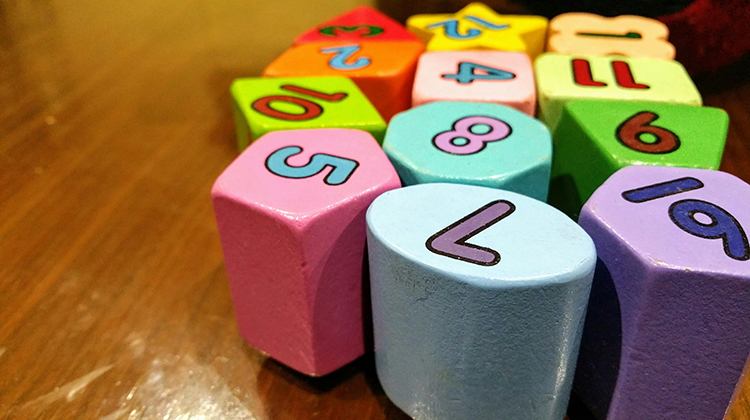
Numeracy is deeply connected to equity and social justice. Longitudinal research by Ritchie and Bates (2013) reveals a striking correlation: a child's maths skills at age seven can predict their socioeconomic status at age 42. This finding underlines the far-reaching implications of numeracy development in early education. Numeracy proficiency can open pathways to academic success, career advancement, and economic stability, while its absence can lead to disadvantage.
In contemporary Australian society, the capacity to engage with numerical information is fundamental to effective citizenship. As the demands of the workforce and daily life become increasingly complex and data-driven, the need for individuals to be numerate has never been more critical. This extends beyond the ability to perform basic calculations - it includes the capability to apply mathematical understanding to interpret data, make decisions, and solve problems in a variety of ways. When we, as teachers, build our students numeracy skills, we are equipping students with the confidence and competence to engage with mathematical ideas in real-life situations - whether they’re managing money, interpreting graphs in the media, or thinking critically about data in society. It is the responsibility of schools and teachers to foster numerate citizens who can participate fully and thoughtfully in democratic and economic life.
Throughout formalised schooling, Numeracy is a core component of the Australian Curriculum and encapsulates a student's ability to know and use mathematics purposefully in various contexts (Australian Curriculum and Assessment Authority, 2024). The fact that numeracy is an embedded element of the Australian Curriculum, as a General Capability means that every teacher, regardless of the subject that they teach, has a responsibility for developing students’ numeracy capabilities. Numeracy is about using mathematics purposefully, whether that’s in science experiments, reading timetables, or designing digital games.
The integration of numeracy throughout the curriculum reflects a broader societal vision. Informed, numerate individuals are better equipped to interpret statistics presented to them in advertisements, manage personal finances, understand health information, and participate meaningfully in society. As such, developing critical social numeracy - numeracy that enables thoughtful and responsible citizenship - is not only a goal within the education system, but an essential skill for our nation and indeed our world. Students must be prepared to navigate a world that increasingly relies on data, algorithms, and mathematical models. They need to be able to interpret, understand and analyse information critically to make informed decisions.
It is essential to elevate the value of numeracy as a critical life skill. Developing numeracy means equipping students with the ability to confidently and accurately apply mathematical thinking in everyday situations. This includes understanding interest rates when applying for a loan, comparing mobile phone plans, interpreting health statistics, managing a household budget, or making sense of election data. When we frame numeracy in this way, it becomes clear that it plays a crucial role in informed decision-making and active participation in society. We must treat numeracy as a critical, foundational competency that empowers students throughout their lives.
My book, Teaching Primary Mathematics: Building Teacher Confidence and Student Success has been written to give teachers at all stages of their career, practical strategies, current research, and real-world examples to strengthen numeracy development and promote effective mathematics instruction. It emphasises the importance of developing numeracy across all stages of schooling so students can confidently apply mathematical understanding in meaningful, real-life contexts - both now and into their futures.
See Teaching Primary Maths -Building Teacher Confidence and Student Success
References
Australian Curriculum Assessment and Reporting Authority [ACARA]. (2025). Numeracy. https://www.australiancurriculum.edu.au/f-10-curriculum/general-capabilities/numeracy?element=0&sub-element=NNNPV
Ritchie, S. J., & Bates, T. C. (2013). Enduring links from childhood mathematics and reading achievement to adult socioeconomic status. Psychological Science, 24(7), 1301-1308. https://doi.org/10.1177/0956797612466268