


Bullying in Schools: Prevention or Cure?
Prevention, they say, is better than cure, and where better to apply this dictum than to prevent the scourge of bullying that infects a sizeable minority of children in schools, either as recurring victims of peer abuse or as perpetrators, or those students in both these categories, that is, the most miserable of all children: the bully-victims.
Well, we have been trying for many years now in Australian schools. Every school is required to have an anti-bullying policy; teachers (most of them) seek to model positive interpersonal relating; positive student bystanders are encouraged and praised; schools almost invariably work with parents to advise, discuss and collaborate when their children are seriously bullied or bully others; in extremes cases, students may be suspended. And yet the statistics on school bullying hardly shift. Approximately one child in six, according to large scale surveys, report being bullied in Australian schools on a weekly basis. See Rigby and Johnson (2016).
Teachers must do something when it happens, if they can. But what? As well as well-intentioned and earnest endeavour to prevent bullying, in my opinion there should be far more serious thought and related action on what to do when the inevitable occurs. Here are my suggestions:
1 Recognise that bullying, especially if persistent, can do serious and even long- lasting harm to vulnerable children. And isn’t everyone vulnerable in some way, and in some situations and seemingly helpless?
2 Recognise that not all cases of bullying are alike - and require different ways of dealing with them. As in many areas in life, there is no size fits all.
3 Become informed of the alternative or supplementary forms of intervention that are appropriate for particular cases of bullying. Acquire and develop skills in the application of such methods.
4 Whilst no two cases are alike, as indeed no human beings and their circumstances are ever the same, some broad - and revisable judgements - may need to be made - and applied.
5 Work as closely as possible with parents.
I suggest these major considerations:
1 Whether the targeted student can learn - with help - how to deal with the problem. If so, how can this be facilitated?
2 Whether the victimisation is the outcome of peer group engagement in the bullying, or limited to Individuals in conflict.
3 Whether a form of mediation is feasible and can be skilfully undertaken.
4 Whether sanctions should be applied. If so, what sanctions to whom, and when?
5 Whether people outside the school, such as parents and the police, can be involved in finding a solution.
How these considerations are to be addressed may also involve policy decisions made by the School or the Department of Education. Here is a brief summary of the basic intervention methods and their application.
1 Students who are being bullied at school can sometimes be counselled and helped to acquire social and relational skills that can overcome their difficulties. This has been called Strengthening the Victim. If this can be done, the outcome is excellent, as it can have effects not only in making them less vulnerable and also in gaining self-esteem. Help can also be offered to mature students who bully and want to improve their relationships with others, through so-called motivational counselling.
2 Very basic to addressing bullying is discovering the motivation for students doing so. Most often bullying is driven by peer groups who are enjoying tormenting or picking on someone. In such cases, perpetrators need to be identified and encountered first individually and then in a group using the Method of Shared Concern. This is a highly effective way of dealing with group bullying. (Rigby, 2007, 2021).
3 Conflicts between individuals, with one more inclined to bully the other, can sometimes be solved through mediation, that is, if they can be brought to see that it is in their interest to relate more positively, without being forced to do so.
4 In some cases, Restorative Practices can be used effectively both with individuals and with groups, combining elements of mediation and restorative action. This approach may entail imposing ‘consequences’ for the offenders.
5 Most schools believe that sanctions are sometimes necessary and justified, especially when the bullying is severe, and certainly if the form of bullying is illegal or criminal. But as a universal remedy there are serious drawbacks and other methods are often more appropriate - and effective.
6 Wherever possible, it is best to work closely with the parents or guardians of students who have been identified as involved in bully/victim problems, to inform, advise and seek their cooperation.
How, when and why these methods may be employed is explained in a short training manual for teachers and counsellors called Interventions in cases of bullying in schools (Rigby2025).
I began this article by raising the question of whether bullying in schools was better addressed by strategies of prevention or cure. Of course, the sensible answer is that we need to do both. But what is commonly not realised is that prevention is never enough. The evolutionary psychologists, such as Volk et al. (2022), argue that aggression is innate and its expression, especially in adolescence and is in many circumstances virtually unstoppable, though it may be deterred, at least in some cases by sanctions or punishment. There are good grounds for believing that this can be so. But there are also good grounds for believing that alternative and appropriately conducted interventions can work better for most students.
Increasingly, studies of the effects of intervention have shown that when cases are carried out using the right method by trained and skilled teachers and counsellors, significant reductions do occur: Rigby & Griffiths (2011); Rigby (2021, 2024). These need not be punitive; indeed, while sometimes seen as necessary and effective, they can be counterproductive, especially when bullying is conducted or supported by groups, as is more often the case. Nobody is saying interventions in group bullying is ever going to be easy. One is confronted at times with tides of opposition. The bold teacher needs to recognise this and be prepared to tackle it with the tools that are now available.
References
Rigby, K. (2007). The Method of Shared Concern: a staff training resource (The video). Adelaide: Readymade Productions. See Method of Shared Concern | Readymade See also for further information on this resource https://readymade.com.au/method
Rigby, K., & Griffiths, C. (2011). Addressing cases of bullying through the Method of Shared Concern. School Psychology International 32, pp. 345-357.
Rigby, K. & Johnson, K. (2016). The prevalence and effectiveness of anti-bullying strategies employed in Australian schools. A report for the Australian Department of Education. Published by The University of South Australia.
Rigby, K. (2021). Addressing cases of bullying in schools: reactive strategies. The Wiley Blackwell Handbook of Bullying, Vol.2. (Edit. Peter Smith and James O’Higgins Norman) p 331-370. New Jersey: John Wiley and Sons.
Rigby, K. (2024) Theoretical perspectives on school bullying and the strengths and limitations of two explanatory models. International journal of bullying prevention,24,6. 101-109.
Rigby, K (2025). Interventions in cases of bullying in schools: a training manual for teachers and counsellors. Melbourne: Amba Press. Interventions in Cases of Bullying in Schools- Amba Press
Volk, A.A., J.A Camilleri, J.A., Dane, A. V. & Marini, Z.A. (2022). Is adolescent bullying an evolutionary adaptation? Aggressive Behaviour, 38 (3), 222-238.
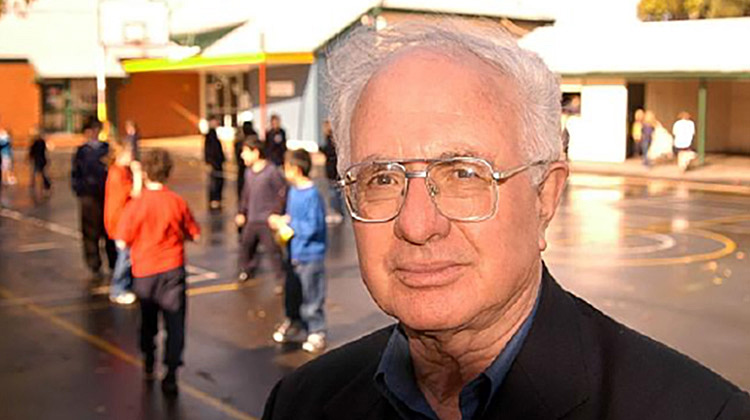
Ken Rigby is currently an adjunct professor in the School of Education at the University of South Australia, where he was employed as a lecturer in Psychology and Research Methods from 1969 to 1995. He has conducted research in a variety of areas, including AIDS, criminology, community satisfaction and drug abuse. However, his main area of research has been in bullying in schools. This led to over 100 publications in peer-reviewed journals and 12 books on the subject and to his engagements by government Departments of Education and schools throughout Australia. For his work on promoting the wellbeing of schoolchildren, he received the Order of Australia Medal (OAM) in 2022.
Born in England in 1932, he graduated in Economics from London University and then in Education at Leicester University. He subsequently emigrated to Australia where he acquired a PhD in Psychology at the University of Adelaide. For 10 years he taught in secondary schools in England and Australia before being employed as a school psychologist and then as university lecturer. An account of his life is available in an autobiography, Oddly Enough published in 2023 (See RIGBY, Ken | Australian Authors (australianauthorsstore.com)