


Building the Spaces in Between
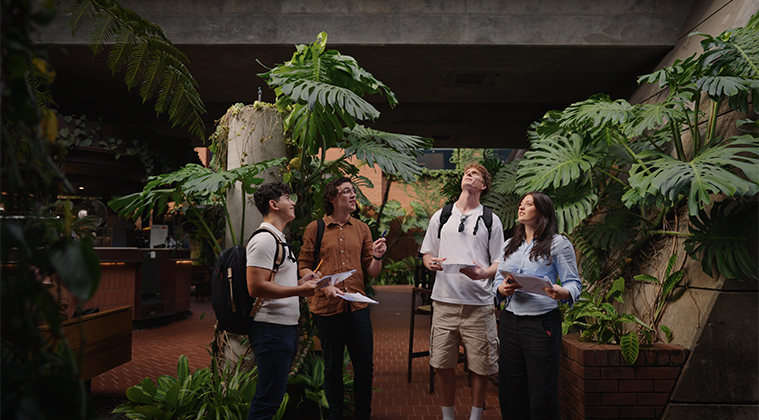
Landscape Architecture is a profession that everyone interacts with regularly, they might not know it though.
Spaces in between buildings, parks, a pleasant riverside walkway, public, liminal spaces that you transition through, often without noticing the intention and skill that they have been developed with, this is where landscape architects ply their trade.
It's a burgeoning profession, Landscape Architecture is one of the few purpose-led professions experiencing growing demand, offering graduates strong career prospects and opportunities to transition directly into practice before completing the degree.
Jared Thorp is a Queensland University of Technology (QUT) graduate landscape architect with an interest in crafting places that connect people to nature and the heritage of the community. He is currently employed at Arup - a global consultancy developing sustainable solutions that shape a better and future-proofed world.
He says, “Landscape Architecture attracts naturally curious people who enjoy solving complex problems through both creativity and analysis.
“The most important quality students can bring to the role is curiosity. We are system thinkers - naturally inquisitive and always questioning how a place came to be, how it functions today, and how it might evolve to inform better design decisions.”
Thorp has been fortunate to work on a raft of high-profile projects across a wide range of scales, from long-term masterplans for cities, transport corridors and waterfronts to detailed construction documentation for public spaces.
Landscape architects work across the full spectrum of project delivery, from masterplanning cities and campuses to assessing completed construction. Between the initial vision and the final built outcome are many phases, including planning, design development, approvals, and documentation, where landscape architects play a critical role.
“I have worked at a masterplanning level, where we draft out the framework by which future development occurs for a city, campus, or piece of infrastructure like a rail line, or a natural entity like a river. Major projects I’ve contributed to in the masterplanning capacity include the Wave on the Sunshine Coast, Sydney Metro Western Sydney Airport, the Coomera Connector on the Gold Coast, and international projects like the Tancheon Waterfront in Seoul, Wetland restoration Shanghai, Nike Campus in Oregon, G60 Roads in Riyadh.
“I also work at a human scale, preparing construction documentation that translates design intent into the built landscape, guiding what is ultimately constructed and planted on the ground. Within Brisbane I have drafted construction documentation for projects like the Brisbane Metro, The Cross River Rail, The Herston Health Precinct, the Riverside Green at South Bank, and 205 North Quay.
“As clichéd as it sounds, no two days are ever the same. A day on the job could look completely different depending on the project you're working on and where it sits in the design process, whether that's developing early concepts, meeting with clients, producing construction drawings or inspecting works on site. That variety is what keeps the work interesting and my passion for the profession alive.
“People are increasingly aware of the challenges shaping our urban environments, from the urban heat island effect and urban salinity to biodiversity loss, water management and the importance of urban ecology. Communities are becoming more informed about how design decisions influence their daily lives, health and connection to place, and there is a growing expectation that new developments deliver more than just functional outcomes.”
QUT is the only university in Queensland that offers Landscape Architecture as a degree. It's typically four-years.
His studies opened the door to an industry-sponsored student award, which helped develop valuable skills, industry connections and professional experience. Through that opportunity, he was able to secure a casual contract with HASSELL, one of Australia’s leading design practices.
“I’ve been fortunate enough to work alongside and learn from many outstanding landscape architecture practitioners throughout my career. Among them, my academic mentors, Dr Shannon Satherley and Ms Claudia Taborda, have had a profound influence on my professional journey. Their patience, humility and generosity in sharing their knowledge have shaped my approach to landscape architecture and created opportunities that continue to impact my career today.”
Australia is facing significant challenges around housing, infrastructure and climate change, but for landscape architects, these challenges represent an exciting opportunity to step up, innovate and help shape better places for the future.
“With the growth and investment occurring across Brisbane and Queensland ahead of the 2032 Games, there is a unique opportunity to create landscapes that are more resilient, connected and meaningful.
“The role of landscape architects is becoming increasingly important as our cities grow and face challenges like climate change, population growth and the need for better public spaces. We work alongside architects, engineers and planners to design places that support communities, protect natural systems and improve everyday life,” he says.