


Are We Curious - or Are We Simply Trying to Prove We Are Right?
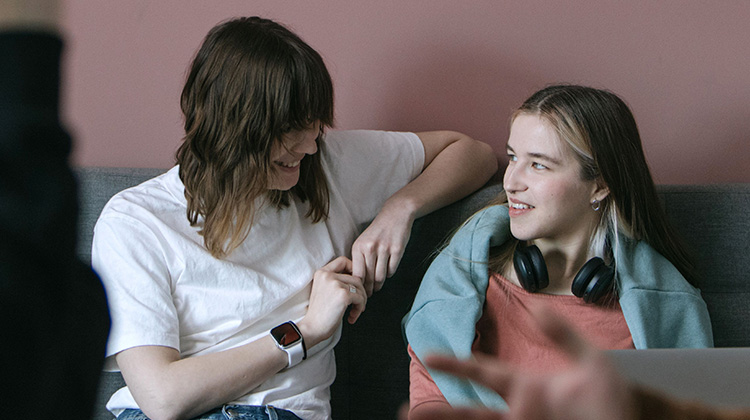
In almost every workshop I run, I invite educators to partner up and discuss a challenge they are experiencing. The instruction is deceptively simple: do not solve the problem. Do not reassure them. Do not share your own experience. Just listen with genuine curiosity.
Almost every time, participants return with the same reflection: "That was much harder than I expected."
That response says something important about the complexity of relational practice in schools. Most educators enter the profession because they care deeply about young people. We want to help. We want to guide. We want to make things better. But genuine curiosity requires us to tolerate uncertainty and resist the very human urge to move quickly towards explanation, correction or solutions.
This tension between our intention to understand and our tendency to seek certainty is something I explore in my recently published book The Relational School: From Behaviour Management to Cultural Transformation.
The quality of our questions is shaped long before the conversation begins. It is shaped by our assumptions, our experiences and the degree to which we are genuinely open to learning something new.
This is especially true in conversations about behaviour.
Many of us have been conditioned - through our own experiences, professional training and school systems - to approach these conversations like investigators. We seek to establish what happened, identify who was responsible, determine whether a rule was broken and decide what should happen next.
In Ask¹, Jeff Wetzler describes the Curiosity Arc as a deliberate choice between assuming and learning. He argues that genuine curiosity emerges when we become sincerely interested in another person's thoughts, feelings and experiences. This sounds simple, but it is surprisingly difficult. In busy schools, certainty often feels faster. We think we already know why the behaviour occurred, what the student was trying to achieve or what the parent really meant. Curiosity invites us to pause and consider another possibility: that there may be something important we do not yet know.
Our questions often reveal where we sit on that arc.
"Why did you do that?"
"Do you understand the impact of your actions?"
"What rule did you break?"
Notice where these questions start. They begin with our interpretation of events rather than the student's experience of them. In doing so, they can move us towards certainty rather than curiosity.
Curious questions sound different. They are less concerned with proving or positioning and more concerned with understanding. They may be temporal ("When did it start feeling this way for you?"), emotional ("What else is going on for you right now?"), relational ("How did you imagine I'd respond?") or perspective-taking ("What do you wish I understood?"). What they share is a genuine interest in another person's experience.
This distinction matters because people tend to become less open when they feel judged, cornered or under threat. I often ask educators why young people lie, even when the evidence appears overwhelming. The answer usually comes quickly: because they believe they are in trouble. Self-preservation takes over. It is a normal human response.
The same dynamic can emerge in any conversation where a person senses that the outcome has already been decided. Rather than sharing openly, they may become guarded, minimise their involvement or tell us what they think we want to hear.
One of the primary purposes of curious questions is not simply to gather information. It is to encourage the other person to talk. As educators, we want ownership, accountability and responsibility. Yet these outcomes are rarely achieved through interrogation. They are more likely to emerge when a young person feels safe enough to be honest, vulnerable and reflective.
Genuine curiosity creates the conditions for this. When students sense that we are sincerely interested in their thoughts, feelings and experiences, they are often more willing to acknowledge their contribution, explore the impact of their actions and participate in finding a way forward.
It would be easy to tell educators simply to "be more curious". But adults do not ask questions in a vacuum. The systems we create in schools quietly communicate what information matters.
If our behaviour processes primarily ask us to identify the rule that was broken, record the incident, determine the level of response and document the consequence, we should not be surprised when our conversations drift towards certainty rather than curiosity. In some ways, our systems have already signalled what data we are expected to gather.
This is not about letting adults off the hook. Even within systems that pull us towards categorising and proving, every interaction presents a choice. Before the behaviour is categorised, the referral completed or the response determined, we can still choose curiosity.
The most relational schools recognise that sustainable change requires both capable adults and aligned systems. We need educators who can remain curious and empathic under pressure, but we also need policies, processes and documentation that invite understanding rather than simply recording evidence.Ultimately, the questions we ask reveal what we believe about behaviour and human growth.
Perhaps before entering any difficult conversation, we need to ask ourselves two questions:
What kind of conversation is my system inviting me to have?
And: Am I genuinely prepared to learn something I do not already know - or have I already decided that I am right?
About the Author
Sue Chandler is the founder of Transformative Schools, an educational consultancy that supports schools across Australia to strengthen wellbeing, engagement and belonging through relational, restorative and evidence-informed practices. Her work focuses on helping schools move beyond behaviour management and towards cultures grounded in connection, accountability and human growth.
The Relational School: From Behaviour Management to Cultural Transformation is available through Amba Press and major online booksellers.
References
Wetzler, J. (2024). Ask: Tap Into the Hidden Wisdom of People Around You for Unexpected Breakthroughs in Leadership and Life. Grand Central Publishing.