


A Bandaid Solution for School Nurses
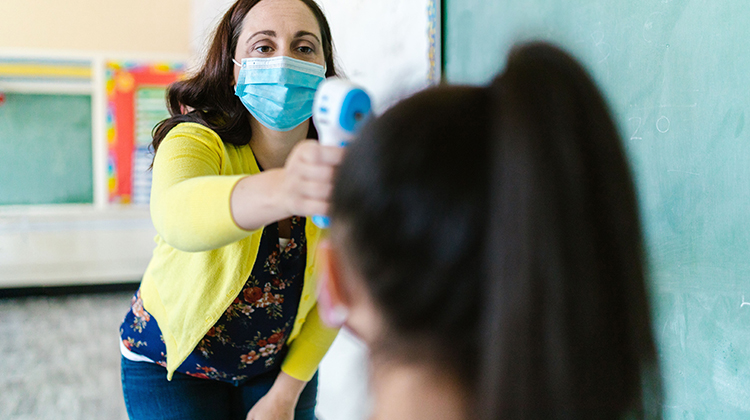
A national approach to school nursing is essential, with research suggesting Australian students receive varying levels of support depending on their school and location.
The World Health Organisation recommends comprehensive school health services be provided by health workers, not teachers, yet teachers are often tasked with responding to student health needs and the demand is now so great it’s outstripping capacity.
“A high proportion of Australian children have additional health and developmental needs,” Dr Anita Moyes from ECU’s School of Nursing and Midwifery said.
“Australian school staff, such as teachers and education assistants, regularly administer student medications, respond to acute life-threatening emergencies such as anaphylaxis and serious medical conditions including diabetes and epilepsy,” Dr Moyes said. “Some of the most vulnerable children have the least access to school nurses.”
She noted that health needs in schools were becoming increasingly complex, ranging from administering medication to how concussion is managed - and this shouldn’t be up to teachers or administration staff to oversee.
“I have a lot of respect for schools and teachers and see the impact that these extra demands are having on them. Yet we have this workforce of registered nurses who are entirely capable of providing high level school health support, and we’re not using them as effectively as we could.”
A national approach to school nursing service delivery, policy and workforce planning would make things more equitable for children, families and schools.
“Australian school students and their families are the most impacted by this lack of equity,” she said. “But it also has implications for schools who are wrestling with increasingly complex student health needs.
“It is really unfair, and a national approach to school nursing would help fix this inequity.”
There is a real opportunity to strengthen school nursing service delivery, leading to better outcomes for children and young people.
“The bottom line is healthy children learn better,” Dr Moyes said. “A reimagined approach should be one that recognises and builds upon the existing workforce and values the expertise nurses bring to schools.”
Dr Moyes is the lead author of a study, which mapped the scope of nursing work and models of delivery in Australian primary and secondary schools.
“Australia has had school nurses for many decades, but research investigating what they do and how these services are organised has lagged,” Dr Moyes said. “Our study shows school nurses provide a wide range of interventions, but access is highly inequitable.”
Dr Moyes explained there are inconsistencies in services provided in states and territories, education sector and school type.
“School nurses should be available to all Australian children, no matter where they live or where they go to school,” Dr Moyes said. “Our study suggests that families and young people have access to vastly different nursing services in schools depending on arbitrary factors such as geographical location.”
The study, Scope of Nursing Work and Models of Service Delivery in Australian Primary and Secondary Schools: A Scoping Review, was published in the Journal of Advanced Nursing.